A Falcon 9 rocket is poised for launch, ready to carry two semiconductor fabrication test beds alongside a new batch of Starlink satellites. This mission, designated Starlink 10-50, is scheduled to lift off from Cape Canaveral at 6:46 a.m. EDT (1046 UTC) on Sunday, with meteorologists estimating an 85 percent chance of favorable weather conditions.
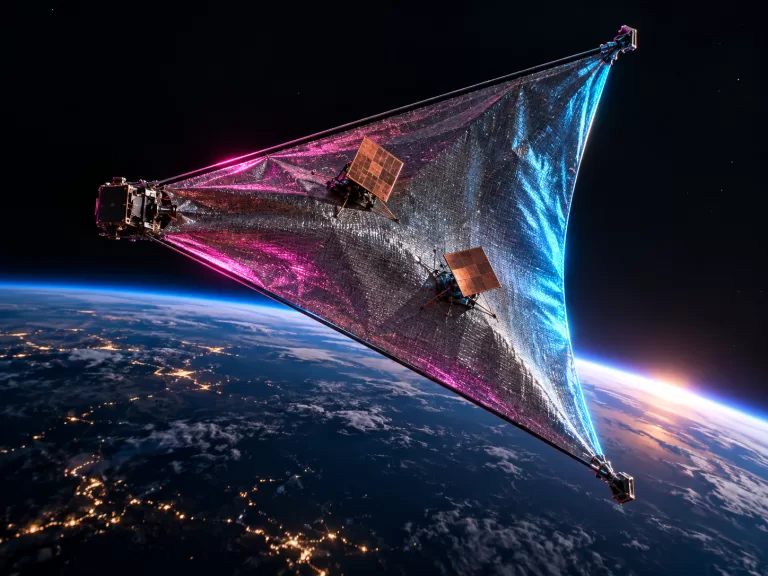
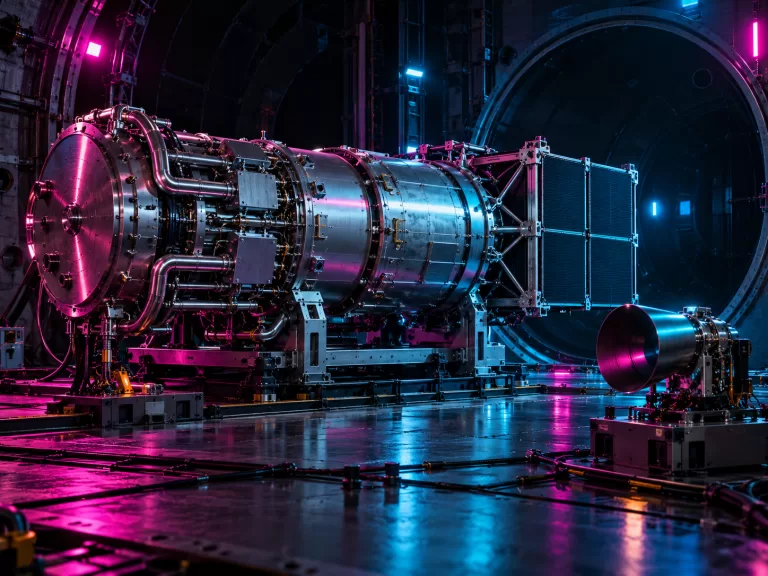
In addition to deploying 29 satellites for SpaceX’s internet service, the Falcon 9 first-stage booster will transport two manufacturing pods developed by Washington, D.C.-based startup Besxar Space Industries on an eight-minute, 19-second sub-orbital journey. This marks the beginning of a series of planned flights, as Besxar announced in October 2025 that it had secured 12 Falcon 9 missions to test its space-based semiconductor substrate manufacturing plants, referred to as Fabships.
Innovative Manufacturing in Space
Besxar aims to leverage the unique conditions of space to produce ultra-pure substrates and precursor materials essential for semiconductor fabrication. “We’re reaching the limits of what can be built on Earth. AI data centers are straining against power and cooling limits, silicon is nearing its physical edge, and fabrication plants can’t achieve the vacuum or yields that next-generation materials demand,” stated Ashley Pilipiszyn, Founder and CEO of Besxar.
Flight Details and Objectives
The Falcon 9 booster will ascend past the 100-kilometer Karman Line, the recognized boundary of space, before returning to Earth. Typically, the booster reaches an altitude of around 115 kilometers before descending for a landing on a drone ship. These sub-orbital flights are particularly advantageous for Besxar, allowing for rapid iterations in their manufacturing process.
The Clipper Class Fabships, roughly the size of a microwave oven, will initially carry terrestrial-manufactured semiconductor wafers to assess their resilience during launch and reentry. Pilipiszyn likened this process to an “ultimate egg drop challenge,” emphasizing the importance of ensuring that wafers can be successfully manufactured in space and returned without damage.
Support and Future Plans
Besxar has garnered support from Nvidia’s Inception Program for startups, with SpaceX also listed as an investor. The company had originally aimed to commence Fabship testing aboard the Falcon 9 by the end of 2025. The upcoming launch represents SpaceX’s 62nd Starlink delivery mission of the year, continuing its efforts to expand internet access from space.
This article was produced by NeonPulse.today using human and AI-assisted editorial processes, based on publicly available information. Content may be edited for clarity and style.
Original source: spaceflightnow.com