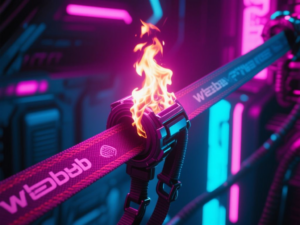
NASA has announced the results of flammability tests on commercial-off-the-shelf webbings intended for use in elevated oxygen environments, which are anticipated for future crewed missions to the Moon and Mars. The testing focused on a webbing made from a blend of 60% Kevlar® and 40% polybenzimidazole (PBI), specifically the natural version produced by Sturges Manufacturing Company, Inc. This material successfully passed the flammability testing outlined in NASA-STD-6001B Test 1, conducted at a concentration of 37% oxygen and a pressure of 8.2 psia.
Testing Methodology
The tests were carried out at the White Sands Test Facility (WSTF) using a surface ignition method in a J-configuration. This setup ensured that the cut edge of the webbing was shielded from direct flame exposure, allowing the igniter to impact the front surface of the material. The maximum oxygen concentration (MOC) was determined by testing multiple samples to ensure compliance with NASA’s stringent flammability criteria.
Results and Analysis
Results indicated that the natural webbing achieved an MOC of 37% oxygen, while the black variant reached 35% oxygen, both at the specified pressure of 8.2 psia. Additionally, offgassing data were collected for the natural webbing, which is characterized by its gold color. These findings are significant as they support the potential use of these webbings in various softgoods applications, such as crew mobility aids and restraint nets.
Implications for Future Missions
As future lunar and Martian missions are planned, the use of an elevated oxygen environment is intended to reduce the prebreathe time required before extravehicular activities. However, this enriched atmosphere also heightens the risk of flammability, necessitating the development of improved fire-resistant materials. The NASA Engineering and Safety Center (NESC) is actively working to ensure that textile materials meeting these requirements are available to the aerospace community.
While the initial tests demonstrate promising results, final performance and wear characteristics of the webbings must be validated in full configurations. The overall flammability performance will depend on the integration of these materials with other components in the final product, emphasizing the need for comprehensive testing to ensure safety and compliance.
This article was produced by NeonPulse.today using human and AI-assisted editorial processes, based on publicly available information. Content may be edited for clarity and style.
Original source: nasa.gov