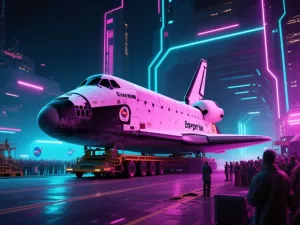
On Sept. 17, 1976, NASA unveiled its first space shuttle orbiter, OV-101, during a public ceremony marking Constitution Day in America’s bicentennial year. The vehicle’s name reflected both presidential direction and the influence of science fiction fans.
From Constitution to Enterprise
NASA had initially planned to call the orbiter Constitution. That changed after nearly 100,000 Star Trek fans wrote to the White House, asking that the shuttle be named after the series’ fictional starship, the USS Enterprise.
President Gerald Ford instructed NASA to use the name Enterprise, explaining in a memo that he was “partial to the name”. The designation also carried a longer American history: Enterprise had previously been used for a Revolutionary War vessel, a World War II carrier, and the first nuclear-powered carrier.
A public unveiling in Palmdale
The rollout took place at Rockwell’s Palmdale facility in southern California. Hundreds of invited guests attended, including Star Trek creator Gene Roddenberry and members of the television series’ cast.
The ceremony’s photographed attendees included NASA Administrator James C. Fletcher; DeForest Kelley, George Takei, James Doohan, Nichelle Nichols, Leonard Nimoy, Gene Roddenberry, U.S. Rep. Don Fuqua, and Walter Koenig.
An orbiter built for atmospheric testing
Enterprise was not designed to fly in space. Instead, the orbiter carried out atmospheric test flights, providing essential testing for the developing shuttle program.
Those flights helped pave the way for the program’s first spaceflights in 1981. The source does not specify the number or details of Enterprise’s atmospheric flights, but confirms their role in preparing the shuttle program for space operations.
From prototype to museum display
Enterprise is now on display at the Intrepid Museum in New York City. Its unveiling marked the public introduction of NASA’s first shuttle orbiter, while its subsequent atmospheric testing supported the path toward the shuttle program’s first missions in space.
Original source: nasa.gov
This article was produced by NeonPulse.today using human and AI-assisted editorial processes, based on publicly available information. Content may be edited for clarity and style.