Curiosity Rover Explores Striped Bedrock on Mars

NASA's Curiosity rover has been investigating a geologic boundary on Mars, revealing intriguing bedrock formations with distinct striped layers.

NASA's Curiosity rover has been investigating a geologic boundary on Mars, revealing intriguing bedrock formations with distinct striped layers.

In July 2026, Super Typhoon Bavi reached peak intensity, impacting the U.S. Northern Mariana Islands and Guam with devastating winds and rain.

Research from the University of Central Florida suggests that prolonged exposure to microgravity and cosmic radiation can lead to accelerated aging at the molecular level, particularly affecting the liver.

NASA has officially transferred a 105-acre parcel of land, known as Area 400, to the U.S. Fish and Wildlife Service, enhancing conservation efforts in Maryland.

Astronauts aboard the International Space Station have documented the infrastructure surrounding the 2026 FIFA World Cup stadiums, offering a unique perspective on urban development and environmental restoration.
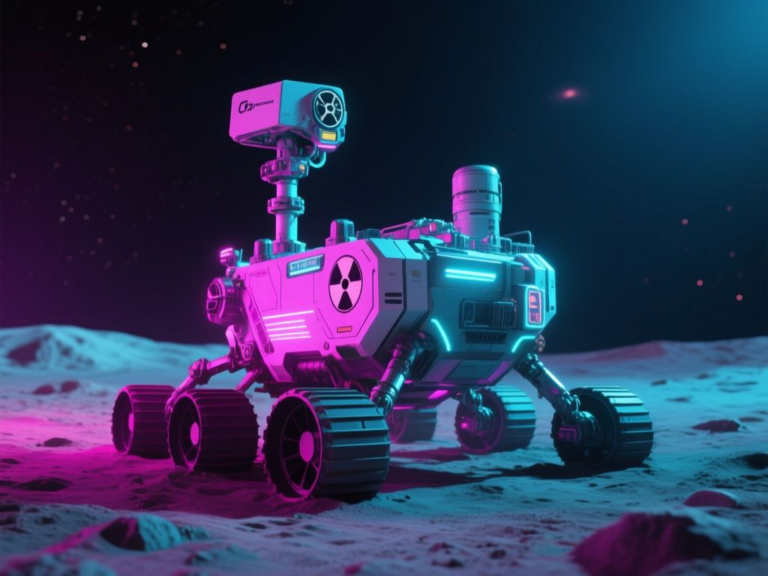
NASA is exploring a lunar rover mission concept that utilizes technology from its Mars rovers, aiming for the Moon's South Pole.

NASA is recruiting volunteers for a year-long isolation study aimed at preparing for future missions to the Moon and Mars, set to begin no earlier than August 2027.

The Vera C. Rubin Observatory has commenced its ambitious 10-year survey of the universe, while researchers unveil a diving suit for cyborg cockroaches to aid in search and rescue missions.

NASA's Space Shuttle Endeavour will transition from a horizontal display to a permanent exhibit in launch position at the California Science Center, starting November 13, 2026.

NASA's TESS has discovered a new planet, Gaia23bra b, utilizing gravitational microlensing, marking a significant advancement in exoplanet detection methods.