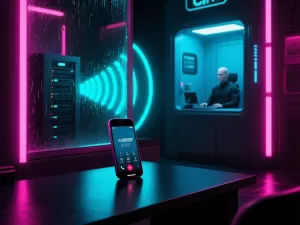
Meta tested its Muse AI concierge with human contractors completing some calls for employees, then rolled the experiment back after privacy concerns surfaced. The contractors handled ordinary but revealing tasks, including booking haircuts, checking stock and requesting quotes. Participants were not initially given adequate disclosure that a person might be handling the call. Reuters: Meta tested a human concierge for Muse calls
That finding does not show that undisclosed contractors handled calls from ordinary public users. Reuters’ documented case was an internal, employee-focused test, based on internal posts and Meta responses that NeonPulse has not independently obtained. Meta’s vice president described the disclosure process as a miss and said the human-assisted test was rolled back for the time being. Reuters: Meta tested a human concierge for Muse calls
The person inside the promise
Muse was launched in the United States with optional connections to services such as email, calendars and payments. A concierge that acts across those services may need context that is more personal than a simple voice command: an appointment, a price request or a question about availability. When a contractor enters that exchange, the service is no longer only an automated interface. Someone else may hear or handle the details needed to complete it. Reuters: Meta launches Muse personal AI agent
Why the trade-off looked attractive
In some internal tests, human assistance lifted completion rates to roughly 95–98%, compared with a lower rate for the AI alone. That helps explain the practical appeal: a person could finish a call when the automated system struggled. But a higher success rate also makes disclosure more important, because the extra capability came with an extra participant. Reuters: Meta tested a human concierge for Muse calls
Disclosure is part of the service
Meta’s privacy policy discusses processing by vendors and service providers, but that general language does not establish whether people were told clearly enough at the moment of a Muse call. The FTC has warned generally that obscured material information can interfere with informed choice; it has not made a finding about this test. Meta Privacy Policy FTC: Bringing Dark Patterns to Light
The enduring problem is simple: delegation changes who receives the information needed to get a task done. A caller asking for a quote may reveal timing, preferences or contact details without expecting a human contractor to take over. The report does not demonstrate malicious intent or establish a legal violation, but it shows how convenience can outrun disclosure even inside a limited test. Meta Privacy Policy FTC: Bringing Dark Patterns to Light