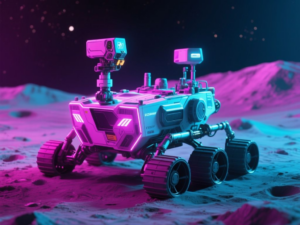
NASA is planning to repurpose one of its Mars rover test models for a lunar mission, introducing a new rover called PROMISE, which stands for Polar Rover for Observation, Mapping and In-Situ Exploration. This initiative aims to leverage existing technology to explore the moon’s south pole, a region of interest due to its potential for future lunar bases.
Background on PROMISE
PROMISE will be based on the engineering test model of the Perseverance rover, which has been used on Earth to test features and updates before deployment to Mars. NASA has described the new rover as a hybrid, incorporating elements from both the Perseverance and Curiosity rovers. Previously known as the Operational Perseverance Twin for Integration of Mechanisms and Instruments Sent to Mars (OPTIMISM), this test model is now being adapted for lunar exploration.
Capabilities and Power Source
The rover will be equipped with a multi-mission radioisotope thermoelectric generator (MMRTG), which utilizes plutonium as fuel. This generator converts heat from the natural decay of plutonium into electricity, allowing PROMISE to operate independently of solar energy. Carlos García-Galán, the program manager for the Moon Base project, emphasized that this capability enables the rover to explore any area on the moon, regardless of illumination conditions, including surviving the harsh lunar night.
Future Prospects and Challenges
While the concept of PROMISE has been announced, significant work remains before it can be launched. The current model lacks essential components such as temperature control sensors, scientific instruments, a communications system, and a suitable generator. Additionally, the rover’s materials must be upgraded to withstand the abrasive lunar dust.
Estimates suggest that the development and launch of PROMISE could cost between $700 million and $1.3 billion, with a potential launch window in the early 2030s. As NASA continues to refine its plans, the mission aims to enhance our understanding of the lunar environment and support future exploration efforts.
This article was produced by NeonPulse.today using human and AI-assisted editorial processes, based on publicly available information. Content may be edited for clarity and style.
Original source: engadget.com