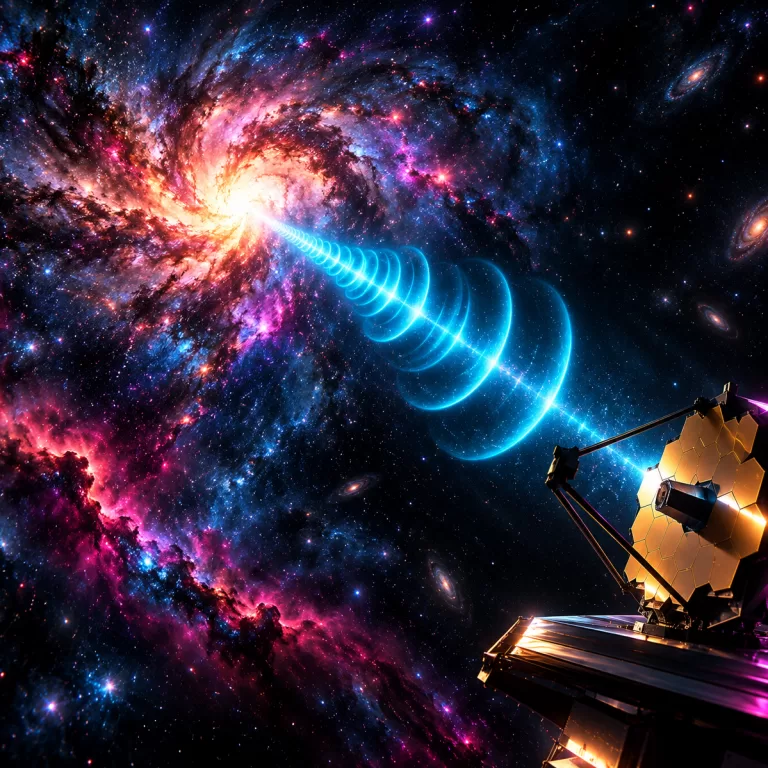
The quest for interstellar travel has long captivated scientists and engineers, particularly through the lens of fusion propulsion systems. Since the 1960s, various concepts have emerged, each promising to unlock the potential for human journeys beyond our solar system.
Historical Context of Fusion Propulsion
In the early days of space exploration, the competition between superpowers fueled advancements in rocketry and nuclear technology. NASA and the Soviet Union explored nuclear reactors to generate heat and electricity for propulsion systems, leading to two primary categories: Nuclear Pulse Propulsion (NPP) and Nuclear Thermal Propulsion (NTP). Concurrently, the development of thermonuclear weapons inspired ambitious fusion propulsion concepts, which aimed to facilitate interstellar travel within a human lifetime.
Types of Fusion Concepts
Fusion propulsion systems can be categorized into Magnetic Confinement Fusion (MCF) and Inertial Confinement Fusion (ICF). MCF involves heating propellant to extreme temperatures exceeding 100 million °C (or 212 million °F), while ICF uses powerful lasers to compress deuterium, helium-3, and tritium pellets into ultra-hot plasma. With advanced configurations, these systems could theoretically achieve velocities between 3,500 km/s and 7,800 km/s. However, even at these speeds, reaching Proxima b would still take between 364 to 163 years.
Notable Projects and Proposals
Among the pioneering figures in fusion propulsion was physicist Robert Bussard, who proposed the Bussard Ramjet in 1960. This concept featured a magnetic field to scoop hydrogen from space, compressing it for fusion without carrying propellant. Bussard’s calculations suggested that the ramjet could achieve velocities up to 4% the speed of light, although challenges related to drag and hydrogen availability limited its feasibility.
Another significant initiative was Project Daedalus, conducted by the British Interplanetary Society from 1973 to 1978. This study proposed a two-stage uncrewed spacecraft powered by an open-cycle fusion engine, capable of reaching 7.1% the speed of light and making the journey to Barnard’s Star in 50 years. However, many technical challenges identified during the project remain unresolved today.
Enduring Challenges and Future Prospects
Despite the innovative designs and concepts that emerged during the Cold War, significant hurdles persist, particularly regarding cost and technological maturity. Projects like Project Longshot and the Enzmann Starship also aimed to explore fusion propulsion, but faced similar limitations. As research continues, the dream of interstellar travel remains alive, with the potential for future breakthroughs that could finally make these ambitious concepts a reality.
This article was produced by NeonPulse.today using human and AI-assisted editorial processes, based on publicly available information. Content may be edited for clarity and style.
Original source: universetoday.com