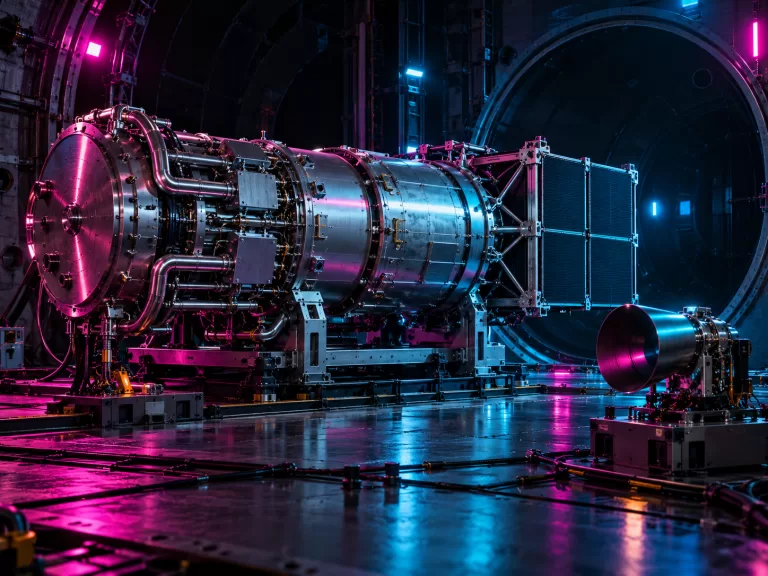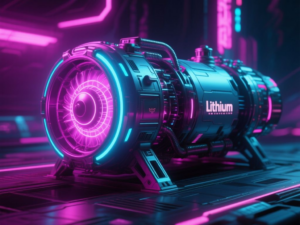
NASA has recently made significant strides in electric propulsion technology, achieving a groundbreaking test of a new lithium plasma engine. This innovative propulsion system is designed to facilitate future human missions to Mars and enhance spacecraft capabilities across the solar system.
Record Power Output Achieved
During testing, the lithium plasma engine reached a remarkable power output of 120 kilowatts, setting a new record in the United States. This power level is approximately 25 times greater than that of the thrusters used on NASA’s Psyche spacecraft, which is currently en route to asteroid 16 Psyche. While Psyche operates at speeds of around 135,000 kilometers per hour (84,000 mph), it is expected to reach a maximum speed of 200,000 kilometers per hour (124,000 mph) as it approaches its destination.
Efficiency and Fuel Savings
The electric propulsion system not only provides impressive speed but also offers substantial fuel savings—up to 90 percent compared to traditional chemical rockets. This efficiency is crucial for long-duration missions, such as those planned for Mars, where fuel conservation can significantly impact mission logistics.
Challenges Ahead
Despite the success of this test, NASA acknowledges that future missions will require even greater power levels, estimated between 2 to 4 megawatts for a human mission to Mars. This would involve multiple thrusters operating for over 23,000 hours (approximately 958 days or 2.6 years). The thrusters must also endure extreme temperatures exceeding 2,800 degrees Celsius (5,000 degrees Fahrenheit), a challenge that was successfully met during the recent tests.
Mission Timeline and Logistics
A human mission to Mars is projected to last around 2.6 years, including a travel period of 6-9 months to reach Mars, followed by approximately 18 months on the Martian surface before returning to Earth. The unique launch windows, which occur every two years due to the orbital dynamics of Earth and Mars, necessitate careful planning and resource management.
As NASA continues to refine this next-generation electric propulsion engine, the implications for future space exploration are profound. While the timeline for human missions to Mars remains uncertain, advancements in propulsion technology are paving the way for a new era of space travel.
This article was produced by NeonPulse.today using human and AI-assisted editorial processes, based on publicly available information. Content may be edited for clarity and style.
Original source: universetoday.com