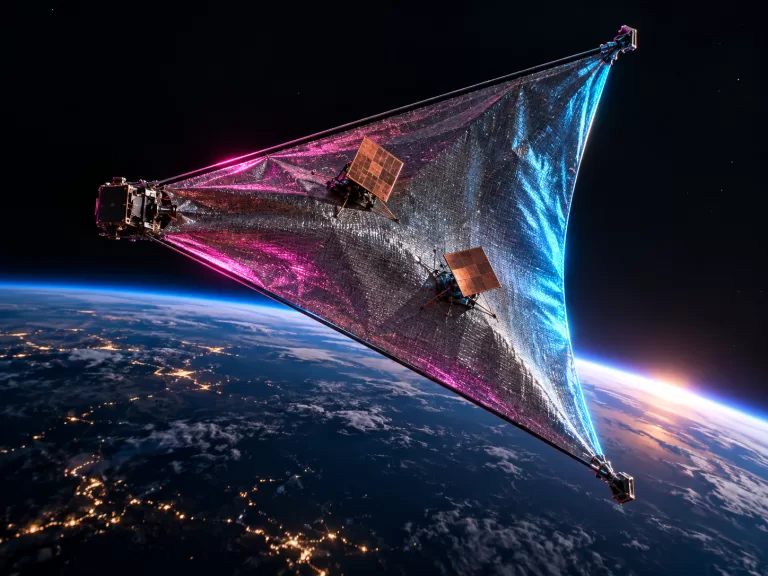
In a remarkable display of engineering, SpaceX’s Falcon 9 rocket lifted off from Cape Canaveral Space Force Station on March 4, 2026, at 5:52:20 a.m. EST (1052:20 UTC). This pre-dawn launch was part of the Starlink 10-40 mission, which successfully deployed another batch of 29 broadband internet satellites into low Earth orbit.
This mission is particularly notable as it included the 600th Starlink satellite launched in 2026 alone, underscoring SpaceX’s rapid expansion of its satellite internet constellation. The Falcon 9 rocket ascended on a north-easterly trajectory, demonstrating the precision and reliability that has become synonymous with SpaceX launches.
Weather Conditions and Launch Details
The 45th Weather Squadron provided a favorable forecast for the launch, estimating a 90 percent chance of suitable weather conditions. While there was a minor concern regarding potential interference from cumulus clouds, the launch proceeded without incident. Meteorologists also monitored conditions for the booster recovery, which is a critical aspect of SpaceX’s reuse strategy.
Booster Recovery and Milestones
The Falcon 9 utilized first stage booster B1080, marking its 25th flight. This booster has previously supported missions including two private astronaut flights for Axiom Space and resupply missions for NASA and Northrop Grumman. Approximately 8.5 minutes post-launch, B1080 successfully landed on the drone ship ‘A Shortfall of Gravitas’ located in the Atlantic Ocean off South Carolina. This landing marked the 145th recovery on this vessel and the 581st booster landing overall for SpaceX, further demonstrating the company’s commitment to reusability in spaceflight.
Implications for Satellite Internet
The successful deployment of these satellites is a crucial step in enhancing global internet coverage through the Starlink network. As SpaceX continues to launch more satellites, the implications for broadband access, particularly in underserved regions, could be significant. The ongoing expansion of the Starlink constellation is poised to reshape the landscape of satellite internet services.
This article was produced by NeonPulse.today using human and AI-assisted editorial processes, based on publicly available information. Content may be edited for clarity and style.
Original source: spaceflightnow.com