In the evolving landscape of robotics, a significant milestone has been reached with the introduction of Eno, the first agentic robot. This innovative system integrates artificial intelligence with general-purpose robotics, enabling it to reason, plan, and act autonomously in the real world.
What is Eno?
Eno is designed not to mimic human form but to extend human capabilities. Built from the ground up at Genesis, every aspect of Eno serves a specific purpose, focusing on functionality and efficiency. This robot represents a shift towards systems that can operate independently, making decisions in complex environments.
Field Testing Advanced Rover Capabilities
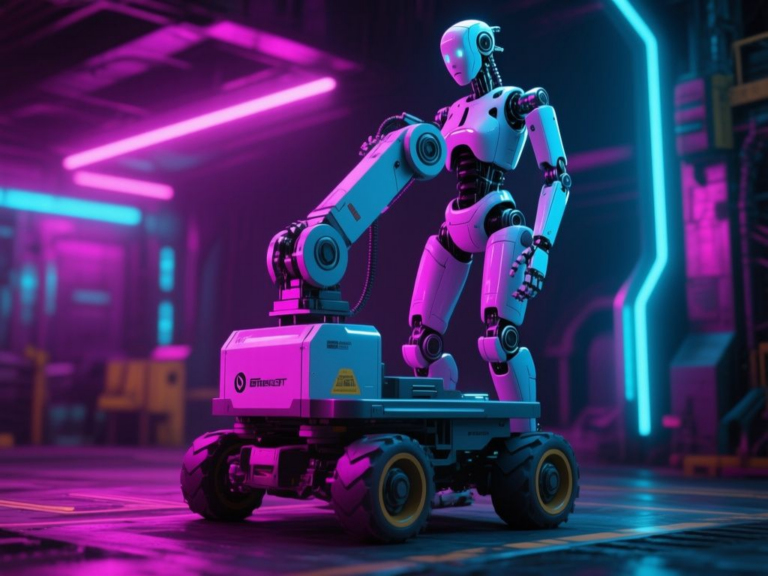
In parallel, engineers from NASA’s Jet Propulsion Laboratory are testing advanced technologies for future lunar and Martian exploration. The prototype rover, named ERNEST (Exploration Rover for Navigating Extreme Sloped Terrain), is undergoing trials in the Colorado Desert. This rover is equipped with software that allows it to navigate challenging terrains autonomously, significantly reducing the need for human intervention during long-range missions.
Robotics in Unpredictable Environments
Another fascinating development comes from the Ace research project at Sony AI. This project addresses the unpredictability of real-world conditions, particularly in table tennis. By simulating counterfactual ball trajectories in real time, Ace enhances its ability to respond effectively to unexpected changes during play.
Robotic Applications in Industry
In industrial settings, the ANYmal robot has demonstrated its value in inspection tasks. A recent deployment in a concrete plant showcased how quadrupedal robots can prevent costly downtimes, such as identifying a cracked foundation that could have led to a $630,000 loss in production.
Additionally, Sanctuary AI has achieved remarkable success in a wire-plugging task for a global Tier 1 automotive supplier, boasting a task success rate exceeding 99.5% and a cycle time of just 2.54 seconds. This performance meets stringent production benchmarks, highlighting the potential of robotics in high-speed manufacturing environments.
As these advancements unfold, the integration of AI with robotics continues to redefine what machines can achieve, paving the way for more sophisticated and capable systems in various fields.
This article was produced by NeonPulse.today using human and AI-assisted editorial processes, based on publicly available information. Content may be edited for clarity and style.