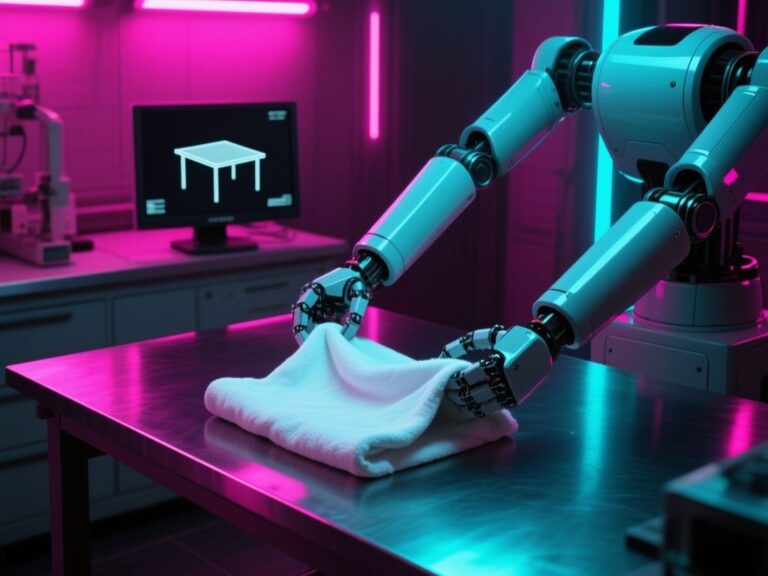
Walden Robotics has officially unveiled its ambitions in the realm of humanoid robotics, emerging from stealth mode with a substantial backing of US $300 million and a valuation of $1.1 billion. As a spinout from the Toyota Research Institute (TRI), Walden aims to transition from research to real-world applications, focusing on creating robots that can effectively assist human workers.
Co-founder and CEO Russ Tedrake emphasizes a practical approach, stating that the company has opted to forgo legs in favor of a wheeled base. This decision stems from a desire to address the addressable market more effectively. Tedrake notes, “I thought about legs for 20 years… But the question is, what’s the addressable market?” By prioritizing a wheeled design, Walden Robotics seeks to enhance stability and safety, crucial factors in environments where robots will work alongside humans.
Targeting Manufacturing and Logistics
While specific applications remain confidential due to partnerships, it is clear that Walden is focusing on manufacturing and logistics sectors. These environments often involve repetitive tasks that are not well-suited for traditional conveyor systems or pre-programmed robotic arms. Tedrake highlights the need for robots that can operate continuously, stating, “You need to find applications with high utilization—where the robot is used 24 hours a day, 7 days a week.” This economic viability is essential for convincing customers to adopt robotic solutions over human labor.
A People-First Philosophy
Walden’s collaboration with Toyota is pivotal, as the automotive giant’s culture emphasizes a people-first approach. Tedrake recalls that discussions with Toyota leadership focused on improving quality of life rather than immediate financial returns. This philosophy aligns with Walden’s goal to automate repetitive tasks, thereby allowing skilled workers to focus on more complex and fulfilling aspects of their jobs.
Design and Durability
The design of Walden’s robots features a robust wheeled base, which not only enhances stability but also allows for a higher payload capacity, making them suitable for demanding manufacturing tasks. Tedrake points out that while many humanoid robots utilize complex, dexterous hands, Walden has opted for simpler, more durable grippers that can withstand the rigors of industrial environments. “I have not seen a more dexterous hand that could have done the work our hand has done,” he asserts.
Looking ahead, Walden Robotics aims to develop general-purpose robots that can adapt to various tasks. Tedrake believes that leveraging previously learned skills will facilitate this evolution, stating, “Fundamentally, multi-tasking is a way to get to a general purpose robot.” This perspective reflects a commitment to creating robots that can effectively serve real customer needs in the manufacturing landscape.
This article was produced by NeonPulse.today using human and AI-assisted editorial processes, based on publicly available information. Content may be edited for clarity and style.
Original source: spectrum.ieee.org