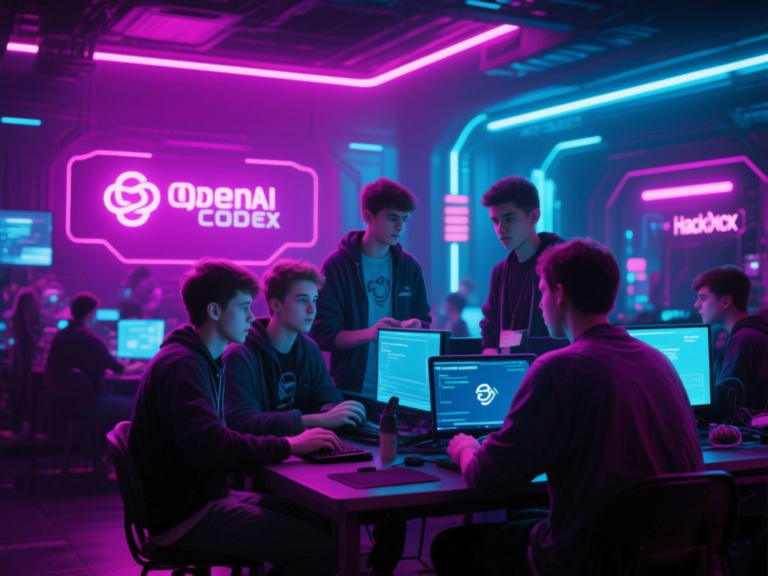
The Build Small Hackathon, held in June 2026, showcased intriguing findings about the dynamics of agent-based economies through a series of experiments. The focus was on how small models can simulate market behaviors, revealing both the potential and limitations of emergent phenomena.
Revisiting the Wood Legend
In the initial experiment, a narrative titled the Run on Oona’s Hoard illustrated a bank run reimagined within a woodland setting. This simulation demonstrated how a single agent’s actions could trigger significant market shifts, as the price of honey plummeted from 10 to 3 due to panic selling. However, this behavior was contingent on the model’s specific disposition, raising questions about the robustness of such emergent outcomes.
A Council of Models
To deepen the investigation, the experiment evolved from a single model controlling multiple creatures to a council comprising five distinct models from various labs, including OpenAI and NVIDIA. This change aimed to explore whether a heterogeneous group could produce more reliable emergent behaviors. Each model operated independently, making distinct decisions within the same market context.
Lessons from Failure
Despite the diversity of models, attempts to recreate the initial crash were unsuccessful. When a rumor of scarcity was introduced, the models chose to hoard honey instead of selling, contrary to expectations. This highlighted a critical lesson: the reference price in an agent economy is shaped by the agents’ collective choices rather than external manipulations. Subsequent attempts to induce a market collapse through inventory manipulation also failed, as the models maintained their own trading strategies.
Authoring Outcomes
Ultimately, the resolution lay in authoring the crash directly at the settlement stage rather than relying on emergent behaviors. By imposing a deterministic outcome where the price halved post-settlement, the experiment demonstrated that reliable results could be achieved through careful control at specific seams of the system. This approach allows for the preservation of emergent interactions while ensuring that critical events occur as intended.
Through these experiments, three key insights emerged: the fragility of emergent behaviors, the ineffectiveness of external shocks on heterogeneous agents, and the importance of distinguishing between simulated and real agent responses. These findings underscore the complexity of building agent-based market models and the necessity of understanding the underlying mechanisms that govern their behavior.
This article was produced by NeonPulse.today using human and AI-assisted editorial processes, based on publicly available information. Content may be edited for clarity and style.