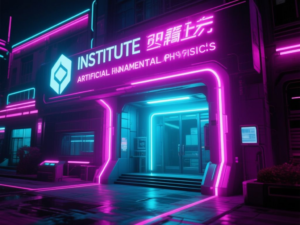
The Institute for Artificial Intelligence and Fundamental Interactions (IAIFI), spearheaded by MIT, has received renewed backing from the National Science Foundation (NSF) for an additional five years, with annual funding increasing from $4 million to $4.98 million. This renewal signifies a pivotal moment for IAIFI, which has spent its initial five years cultivating a research framework and an interdisciplinary community centered on the interplay between artificial intelligence and physics.
Established in 2020 as part of the National Artificial Intelligence Research Institutes program, IAIFI unites researchers from MIT, Harvard, Northeastern, Tufts, and Boston universities. The institute’s work has demonstrated that machine learning can significantly accelerate discoveries in physics, while insights from physics contribute to the development of more principled and interpretable AI systems.
A Two-Way Street of Discovery
“From the beginning, IAIFI has been built around a two-way street: AI enabling better physics, and physics enabling better AI,” states Jesse Thaler, IAIFI’s director and a professor of physics at MIT. The institute has witnessed this reciprocal relationship manifest across various domains of physics and AI, yielding not only new results but also innovative methodologies for scientific inquiry.
Research Across Disciplines
IAIFI’s research encompasses particle physics, nuclear physics, astrophysics, and foundational AI, with many breakthroughs arising from collaborations across these fields. For instance, in particle physics, IAIFI researchers have developed AI techniques to manage the vast data streams from the Large Hadron Collider in real-time. In nuclear physics, generative AI methods are being utilized to model quark and gluon interactions in lattice quantum chromodynamics, offering fresh perspectives on the structure of matter. Meanwhile, in astrophysics, machine learning aids in the discovery of new cosmic phenomena and enhances the sensitivity of the LIGO gravitational-wave experiment.
Investing in Future Talent
A hallmark of IAIFI is its commitment to nurturing talent. The IAIFI Postdoctoral Fellows program supports early-career scientists at the intersection of physics and AI, fostering mentorship and collaboration. To date, eight fellows have completed the program, with several securing faculty positions or joining leading AI companies.
Additionally, IAIFI’s annual PhD Summer School has emerged as a key event for cultivating a community of “centaur scientists” proficient in both physics and AI. The 2026 edition attracted nearly 600 applications for approximately 100 in-person spots, alongside around 300 expected virtual participants.
A Vision for the Future
As IAIFI embarks on this new phase, the renewed funding presents an opportunity to delve deeper into what the institute refers to as the “physics of AI.” This involves leveraging physical reasoning and challenges to not only apply AI but also to enhance its understanding and efficacy. “Now we have the foundation — and the entrepreneurial spirit of our centaur scientists — to push that model into new territory and raise our ambitions,” concludes Thaler.
This article was produced by NeonPulse.today using human and AI-assisted editorial processes, based on publicly available information. Content may be edited for clarity and style.