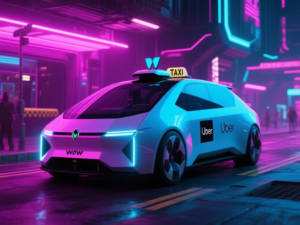
Waymo has sharply increased its lobbying spending as it seeks to persuade U.S. regulators to clear a path for fully autonomous taxi services, intensifying its battle with rival Uber over the future of robotaxis. The Alphabet-owned company spent more than $1 million between April and June on lobbying the federal government, more than double its outlay a year earlier, according to filings. This increase positions Waymo’s spending close to Uber’s and significantly ahead of rivals such as Amazon‘s Zoox and Tesla.
Contrasting Visions for Ride-Hailing
The rise in lobbying comes as Waymo and Uber push competing visions for the future of ride-hailing. Waymo advocates for a faster route to fully driverless commercial services, while Uber supports a staggered rollout allowing robotaxis to operate alongside human drivers. Their diverging legislative strategies have contributed to a deteriorating relationship, with reports indicating that Waymo is exploring options to exit its partnership with Uber in cities like Austin and Atlanta.
Increased Lobbying Activity
Both companies are lobbying aggressively in several U.S. states and Washington, D.C., following pushback that has stalled their expansion into markets such as New York and Chicago. Politicians and labor groups have raised concerns that the technology could displace drivers and undermine existing services. In the first half of 2026, Waymo increased its lobbying expenditure by 93 percent from the previous year, totaling slightly more than $2 million. The company has called for a federal framework to facilitate the rollout of robotaxis.
Local and State-Level Engagement
At the local level, Waymo has outspent both Uber and Zoox in lobbying efforts in Washington, D.C., advocating for robotaxi services in the capital. In New York state, Waymo has invested over half a million dollars this year—more than double Uber’s lobbying spend—as it seeks a foothold in one of the largest taxi markets. This push intensified after Governor Kathy Hochul retracted proposals that would have allowed autonomous vehicle companies to operate statewide. Waymo has also proposed establishing a $20 million fund to support drivers impacted by the technology’s deployment.
Uber’s Position and Strategy
In contrast, Uber has been working to regain lost ground in autonomous vehicles after abandoning its in-house self-driving initiative in 2020. The company has committed over $10 billion in the past year through equity stakes and robotaxi fleet agreements. Uber has cautioned Democratic-led states against a blanket rollout of robotaxis, advocating instead for hybrid networks that integrate human drivers with autonomous vehicles. In New Jersey, Uber lobbyists have suggested that any platform offering robotaxi services should utilize human drivers for at least 85 percent of rides during a three-year pilot program.
Critics have accused Uber of attempting to secure regulatory capture to maintain its market share amid rising competition. However, Uber has denied claims of being anti-autonomous vehicle, asserting that hybrid networks facilitate quicker access to technology for consumers while providing policymakers with a practical framework for managing the transition.
This article was produced by NeonPulse.today using human and AI-assisted editorial processes, based on publicly available information. Content may be edited for clarity and style.
Original source: arstechnica.com