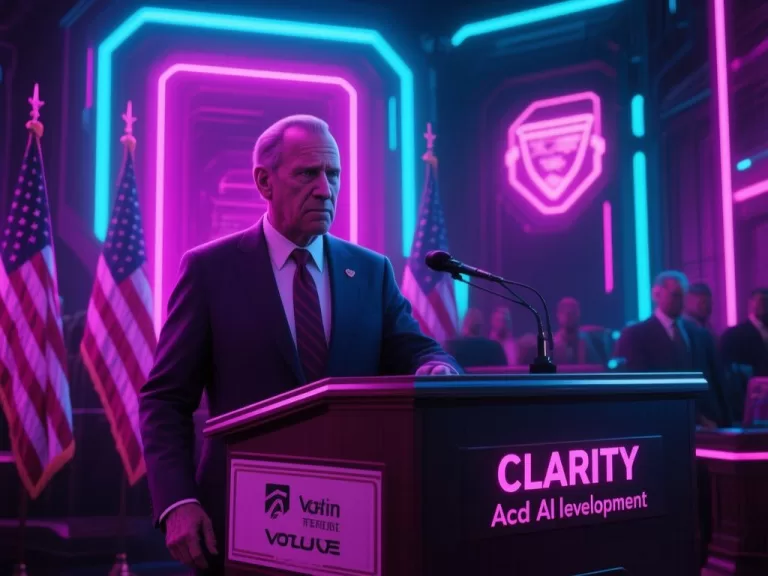
In a recent social media post, Michael Saylor, the executive chairman of MicroStrategy and a prominent figure in the Bitcoin community, expressed his strong opposition to Bitcoin Improvement Proposal 110 (BIP-110). This proposal aims to limit non-monetary transactions on the Bitcoin network, a move that Saylor argues could undermine the network’s core principles.
Background on BIP-110
BIP-110 was introduced in December 2025 to address concerns regarding non-fungible token-like Ordinals inscriptions and other arbitrary data that could congest the Bitcoin network. Proponents of the proposal argue that it is essential to maintain Bitcoin’s primary function as a peer-to-peer cash system. Saylor, however, contends that while he agrees with the objectives of BIP-110, he fundamentally disagrees with its proposed solution.
Saylor’s Position
In a detailed post spanning approximately 3,700 words on X.com, Saylor outlined his “110 reasons” for opposing BIP-110. He emphasized the importance of neutral rules, hard consensus, open markets, and permissionless innovation within the Bitcoin ecosystem. Saylor acknowledged that many respected Bitcoiners support the proposal, citing their concerns about validation accessibility and the preservation of affordable payments. He stated, “I share the objectives. I disagree about the remedy.”
Community Response and Implications
As of the time of his post, it had garnered significant attention, with 879,000 views, 692 replies, and 852 retweets. This level of engagement highlights the ongoing debate within the Bitcoin community regarding the future direction of the protocol. The discussion surrounding BIP-110 is reminiscent of the Blocksize Wars from 2015 to 2017, where similar disputes over scalability and network governance arose.
Current Status of BIP-110
For BIP-110 to be activated, it requires support from 55% of Bitcoin nodes validating blocks. Recent data indicates that only 1% of blocks supported the proposal during the last validation period. This lack of consensus raises questions about the proposal’s future viability, especially as activity related to Ordinals has significantly decreased, with fewer than 10,000 inscriptions per day recently, down from a peak of over 400,000 in August 2023.
Critics, including Adam Back, CEO of Blockstream, have labeled BIP-110 as an attempt to impose restrictions on the network, arguing that Bitcoin’s decentralization should allow for diverse opinions without coercive measures. Meanwhile, supporters of BIP-110 argue that the current state of Ordinals poses a serious threat to the network’s integrity, necessitating immediate action.
This article was produced by NeonPulse.today using human and AI-assisted editorial processes, based on publicly available information. Content may be edited for clarity and style.
Original source: cointelegraph.com