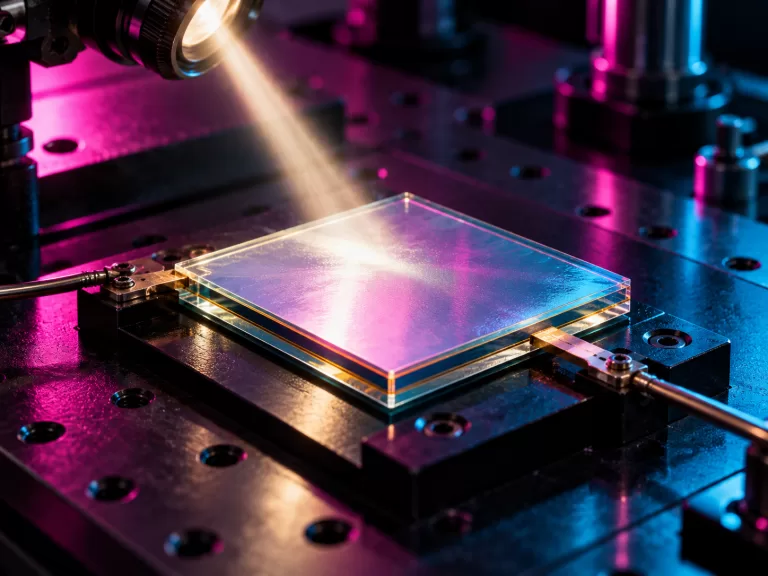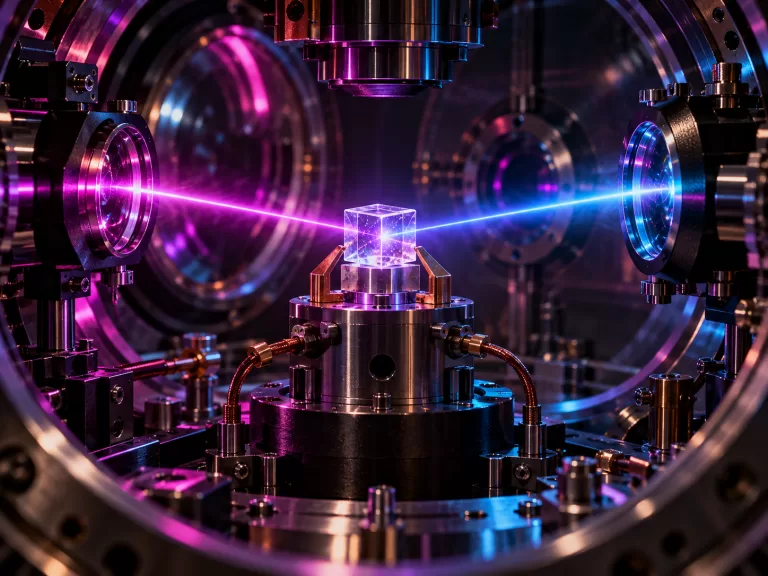
In Hammond, Indiana, a quantum optimization machine has already taken a place inside a commercial data center. The deployment is one small piece of a much larger contest: turning quantum computing into something people can use to solve consequential problems.
That gives substance to an argument made by Quantum Computing Inc. CEO Yuping Huang in an October 6 column for Fast Company: working systems exist, even while the technology remains unfinished. But the most revealing story emerges when that claim is placed beside actual deployments, customer experiments and independent scrutiny.
Quantum computing gets a place in the data center
QCi and Quantum Corridor announced the Hammond installation on March 30. Their Dirac-3 machine offers network access to a specialized optimization system: hardware designed to search for useful solutions among competing choices and constraints. QCi builds its approach around photonics, using light rather than the superconducting circuits found in some rival systems.
This matters because access is becoming practical infrastructure. A company can explore a specialized machine through a service instead of building its own quantum laboratory. The installation alone, however, does not establish that a customer’s calculation will beat the best classical alternative.
A banking experiment shows what the prize could look like
In a separate trial announced in September 2025, HSBC and IBM combined quantum and classical computing using real, production-scale trading data. HSBC reported up to a 34% improvement over common classical techniques in predicting whether a European corporate bond trade would be filled at a quoted price.
That is a narrow but tangible target: better decisions inside an existing business process. The figure describes prediction performance in that trial—not investment returns, a universal speedup or proof of superiority over every classical method. It also illustrates how quantum hardware can work alongside conventional computers.
The next test: does the value exceed the bill?
A newer development puts that question under a microscope. On October 7, DARPA advanced Atom Computing, Diraq, IBM and IonQ to the final stage of its Quantum Benchmarking Initiative. They join Microsoft and PsiQuantum in a program assessing whether quantum systems can achieve computational value greater than their cost by 2033.
Government evaluators will scrutinize developing hardware and systems against the companies’ plans. Advancing is a step toward verification, not certification that a commercially useful machine has already arrived. The different approaches also remain distinct: QCi’s photonic optimizer should not be confused with the machines those teams propose.
The picture these sources reveal is more interesting than a faster desktop. Quantum’s near-term foothold could be specialized services that improve a difficult calculation, while larger ambitions in molecular research and materials still depend on further progress. Our assessment: the decisive breakthrough will be a useful result that survives comparison on accuracy, time and total cost—and gives someone a reason to come back for the next calculation.