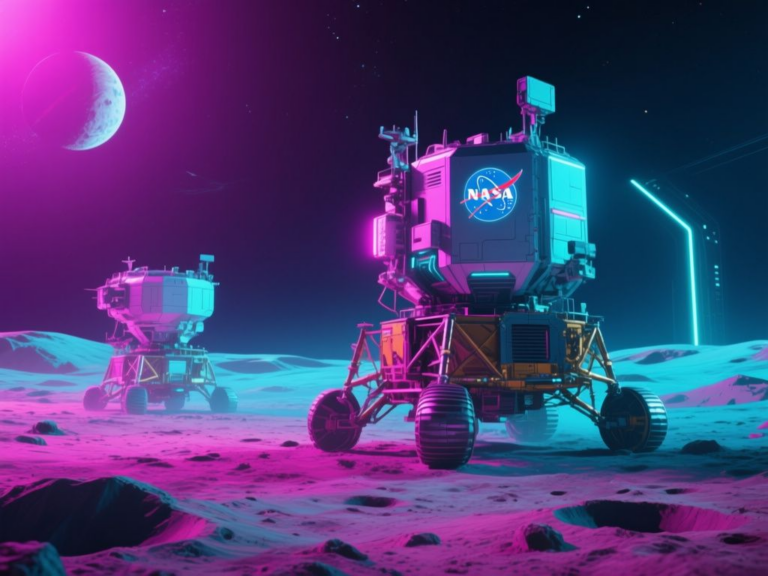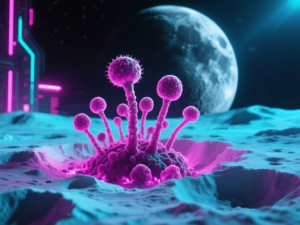
As humanity prepares for deeper exploration of the Moon, a critical concern emerges: the potential survival of Earth microbes in extraterrestrial environments. A team from the NASA Goddard Space Flight Center and the NASA Johnson Space Center has made significant strides in understanding whether astronaut-associated microbes can endure the harsh conditions of the Moon’s polar regions.
This research, published in Science Advances, addresses the issue of forward contamination, which aims to prevent Earth organisms from interfering with potential extraterrestrial life. The study specifically investigates the survival capabilities of various microbes in the lunar polar regions, which feature deep craters and complex topography.
Microbial Candidates for Survival
The researchers focused on several organisms, including Aspergillus niger, Bacillus subtilis, Staphylococcus aureus, Deinococcus radiodurans, and various species of Fusarium. Notably, Aspergillus niger has previously been found on the International Space Station and has demonstrated resilience in space conditions. This fungus thrives in a temperature range of 6 °C to 47 °C (43 °F to 117 °F), with optimal growth between 35 °C to 37 °C (95 °F to 99 °F).
Experimental Conditions and Findings
To assess microbial resilience, the team simulated the lunar south pole’s conditions, specifically in areas like Nobile Rim, Connecting Ridge, and De Gerlache Rim. They integrated laboratory data with topographic models that illustrate radiation distribution across the lunar surface. The results indicated that the lunar south pole could harbor locations conducive to microbial survival, particularly highlighting the potential for Aspergillus niger to withstand ultraviolet (UV) radiation.
Implications for Future Lunar Missions
Dr. Heather Graham, an organic chemist at NASA Goddard and co-author of the study, emphasized the importance of recognizing biological potential on the Moon. “When we think of the Moon, we don’t typically think of biology,” she stated, advocating for careful exploration of these sites to understand microbial presence and lunar chemistry before human visits alter the environment.
NASA’s commitment to planetary protection is crucial as it prepares for the upcoming Artemis program, which aims to return astronauts to the lunar surface and establish a permanent base at the lunar south pole. Understanding how to mitigate microbial contamination will be essential for maximizing scientific discovery and ensuring crew safety.
This article was produced by NeonPulse.today using human and AI-assisted editorial processes, based on publicly available information. Content may be edited for clarity and style.