In the quest for interstellar travel, the concept of antimatter propulsion emerges as a fascinating yet complex possibility. This method, rooted in the annihilation of matter and antimatter, could potentially unlock the energy needed to traverse vast cosmic distances.
The Science Behind Antimatter
The fundamental principle of antimatter is straightforward: for every particle of matter, there exists a corresponding antiparticle with the same mass but opposite charge. When a particle and its antiparticle collide, they annihilate each other, releasing energy equivalent to that of a thermonuclear bomb. This annihilation also produces secondary particles, such as pions and muons, which can be harnessed to generate thrust through magnetic nozzles.
Historical Context and Development
The theoretical groundwork for antimatter was laid in the early 20th century, with significant contributions from physicists like Paul Dirac and Robert Oppenheimer. The existence of positrons was confirmed in 1932 by Carl D. Anderson, and by 1955, antiprotons were identified using the Bevatron accelerator. Since the 1990s, researchers at CERN have made strides in creating and trapping antihydrogen atoms.
Propulsion Concepts and Challenges
Antimatter propulsion concepts can be categorized into three main types: Beam-Core Rockets, Thermal Rockets, and Antimatter-Catalyzed Microfission-Fusion (ACMF). Beam-Core Rockets utilize annihilation to produce charged particles directed through magnetic fields, potentially achieving speeds of up to 0.58 times the speed of light. In contrast, Thermal Rockets heat a working fluid using annihilation, while ACMF concepts use antimatter to initiate nuclear fusion reactions.
Despite the theoretical advantages—such as an energy yield of approximately 10 billion megajoules per kilogram of antimatter—practical implementation faces significant hurdles. The production of antimatter is prohibitively expensive, with estimates suggesting that creating just one gram could cost around $62.5 trillion. Current facilities produce less than 20 nanograms of antimatter, making large-scale applications unfeasible.
Future Prospects
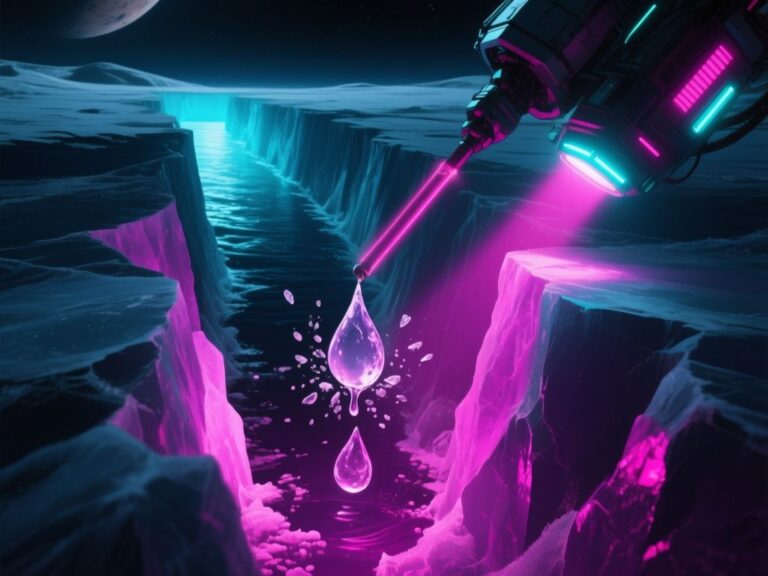
Innovative proposals, such as the Vacuum to Antimatter-Rocket Interstellar Explorer System (VARIES), suggest harvesting antimatter in space using powerful lasers. However, the feasibility of such systems remains uncertain, as does the ability to store antimatter safely. Current methods are energy-intensive and low in density, complicating the storage of antimatter for propulsion purposes.
In conclusion, while antimatter propulsion holds immense potential for future interstellar missions, substantial technological advancements are necessary to overcome the current limitations. The exploration of this propulsion method remains a tantalizing frontier in the realm of space travel.
This article was produced by NeonPulse.today using human and AI-assisted editorial processes, based on publicly available information. Content may be edited for clarity and style.
Original source: universetoday.com