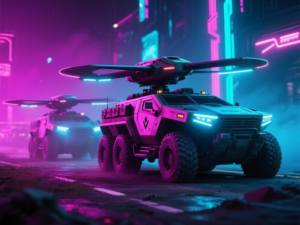
In a landscape marked by conflict, Ukrainian roboticists are forging a path toward a future where the frontline is patrolled by machines rather than humans. This vision is becoming tangible with the development of advanced uncrewed ground vehicles (UGVs) that are reshaping military operations.
The Zmyi: A New Kind of Warrior
Among the forefront of this technological evolution is the Zmyi, an uncrewed ground vehicle developed by RoverTech. Weighing 800 kilograms (1,700 pounds) and measuring 2.15 by 1.5 meters, the Zmyi is engineered for versatility, capable of performing tasks ranging from demining to combat operations. Its design emphasizes stealth, being nearly noiseless and generating minimal heat to evade detection by enemy surveillance.
Operational Success and Endurance
RoverTech’s CEO, Borys Drozhak, highlights the Zmyi’s operational prowess, noting that it can complete an average of 57 missions in the perilous kill zone—an area approximately 35 kilometers wide where combat is intense—before being incapacitated. This endurance is significantly higher than the average for typical UGVs, which is about seven missions. The Zmyi’s robust construction allows it to return even if two of its wheels are damaged.
Strategic Shifts in Warfare
The rise of UGVs is a direct response to the evolving dynamics of warfare, particularly in Ukraine, where the use of drones has transformed the battlefield. As aerial drones increase in number and capability, the battlefield has become more transparent, making traditional manned operations increasingly dangerous. In light of this, UGVs have begun to take over logistical roles, transporting supplies and evacuating wounded soldiers, thereby reducing the risk to human life.
A Vision for the Future
In April 2023, President Volodymyr Zelenskyy ordered the procurement of 50,000 UGVs for the military by the end of 2026, a significant increase from previous years. This ambitious plan reflects a broader strategy to integrate robotics into military operations, potentially reducing the number of soldiers needed on the frontline by 30 to 40 percent, according to defense analysts.
Drozhak envisions a future where the battlefield is dominated by robotic systems, minimizing the need for human presence in combat zones. He asserts that this shift could empower nations to defend themselves more effectively through technology alone, reducing the human cost of warfare.
As the conflict continues, the implications of these advancements extend beyond Ukraine, potentially reshaping military strategies worldwide. The integration of UGVs and autonomous systems may redefine the nature of warfare, emphasizing the role of technology in safeguarding human lives.
This article was produced by NeonPulse.today using human and AI-assisted editorial processes, based on publicly available information. Content may be edited for clarity and style.