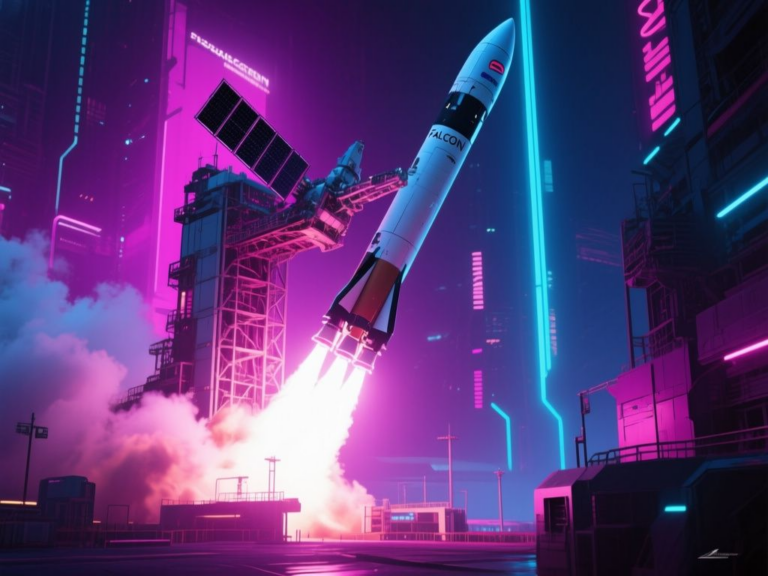
The SpaceX Falcon 9 rocket successfully launched on May 15, 2026, at 6:05 p.m. EDT from Space Launch Complex 40 at Cape Canaveral Space Force Station in Florida. This mission marks the 34th commercial resupply mission under NASA’s contract with SpaceX, delivering nearly 6,500 pounds of cargo to the International Space Station (ISS).
The Dragon spacecraft is scheduled to autonomously dock with the ISS at approximately 7 a.m. on May 17 at the forward port of the station’s Harmony module. NASA will provide live coverage of the rendezvous and docking, starting at 5:30 a.m. on various platforms, including NASA+, Amazon Prime, and YouTube.
Scientific Experiments on Board
Among the cargo are several new experiments aimed at advancing our understanding of various scientific fields. One notable project will assess how effectively Earth-based simulators replicate microgravity conditions. Another experiment involves a bone scaffold made from wood, which has the potential to lead to new treatments for conditions like osteoporosis.
Additionally, the Dragon spacecraft is equipped with tools to investigate how red blood cells and the spleen adapt in space. It also carries an instrument designed to study charged particles surrounding Earth, which can affect power grids and satellites. This investigation could enhance our understanding of planetary formation.
Long-Term Research and Development
These experiments represent just a fraction of the hundreds of investigations conducted aboard the ISS, which has been continuously inhabited for over 25 years. The ISS serves as a critical platform for research in biology, biotechnology, physical sciences, and Earth and space science.
NASA’s ongoing work aboard the ISS not only contributes to scientific breakthroughs but also aids in addressing the challenges of human spaceflight. This mission supports the broader goals of expanding commercial opportunities in low Earth orbit and laying the groundwork for future long-duration missions to the Moon and Mars, as part of the Artemis program.
Future Plans for the Dragon Spacecraft
The Dragon spacecraft is expected to remain at the ISS until mid-June, when it will return to Earth, bringing back time-sensitive research and cargo. The spacecraft will splash down off the coast of California.
For more information on the International Space Station and its research initiatives, visit NASA’s official site.
This article was produced by NeonPulse.today using human and AI-assisted editorial processes, based on publicly available information. Content may be edited for clarity and style.