Imagine monitoring autonomous rovers on the lunar south pole when a solar storm alert comes through. Fortunately, these rovers are equipped with cutting-edge, hair-thin nanotube shielding designed to protect them from harmful electromagnetic waves and radiation. This scenario, while still in the future, reflects the advancements being made today by researchers at the Korea Institute of Science and Technology (KIST).
Breakthrough in Shielding Technology
KIST’s recent research, published in Advanced Materials, introduces a novel composite shielding technology that could significantly enhance the safety of astronauts and robotic explorers on long-term space missions. The motivation behind this development stems from the need for flexible, lightweight, and durable shielding solutions that can adapt to various spacecraft platforms.
Composition and Performance
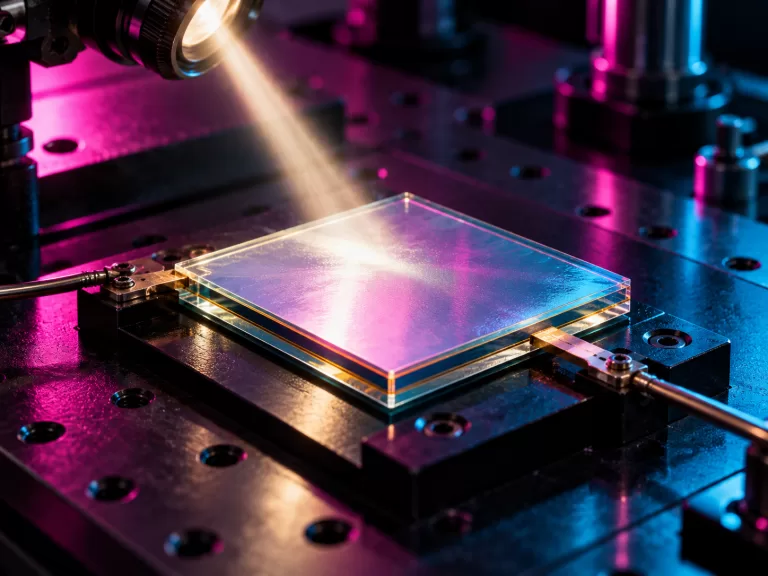
The team combined two distinct types of nanotubes: one that reflects electromagnetic waves and another that absorbs neutron radiation. Remarkably, the composite shielding can be 3D-printed and exhibits high elasticity. Testing has shown that this material reflects an impressive 99.999 percent of incoming electromagnetic waves and absorbs approximately 72 percent of neutron radiation. Furthermore, it can endure extreme temperature fluctuations, ranging from -196 degrees Celsius to 250 degrees Celsius (-321 degrees Fahrenheit to 482 degrees Fahrenheit).
Applications Beyond Aerospace
Dr. Joo Young-ho, a principal researcher at KIST’s Extreme Environment Shielding Materials Research Center, emphasized the significance of this material, stating, “This material represents a completely new concept in shielding technology—it is as thin as tape and as flexible as rubber yet simultaneously blocks both electromagnetic waves and radiation.” The researchers envision applications for this technology extending beyond aerospace, targeting defense and medical fields as well.
Implications for Future Missions
This study arrives at a pivotal moment, following the successful Artemis 2 mission, which marked humanity’s return to the Moon’s vicinity for the first time since Apollo 17 in 1972. Upcoming missions, including Artemis 3 in 2027, aim to establish a lunar base utilizing in situ resource utilization (ISRU) to minimize reliance on Earth-supplied resources. Advanced shielding technologies like this one are crucial for ensuring the longevity and resilience of spacecraft in the extreme conditions of space.
As we continue to explore the cosmos, the development of such innovative materials will play a vital role in protecting astronauts and equipment from the harsh realities of space travel. The future of space exploration looks promising, and with advancements like these, we are one step closer to realizing our ambitions beyond Earth.
This article was produced by NeonPulse.today using human and AI-assisted editorial processes, based on publicly available information. Content may be edited for clarity and style.
Original source: universetoday.com