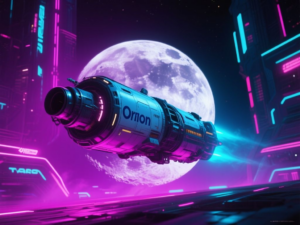
The Artemis II mission, launched on April 1, 2026, represents a pivotal moment in human space exploration as it successfully completed a nearly 10-day journey around the Moon. This mission is notable for being the first crewed flight of NASA’s Orion spacecraft, carrying astronauts Reid Wiseman, Victor Glover, Christina Koch, and Canadian Space Agency astronaut Jeremy Hansen.
Mission Overview
During the mission, the crew reached a record distance of 252,756 miles from Earth, surpassing the previous human distance record set by Apollo 13 in 1970. The mission’s primary objectives included observing the lunar surface and preparing for future lunar exploration, which will support scientific discovery and economic benefits, as well as lay the groundwork for future human missions to Mars.
Pre-Launch Preparations
Prior to the launch, the Artemis II crew engaged in extensive training, including field geology exercises in Iceland’s volcanic terrain. This training involved collecting rock samples and refining navigation skills under challenging conditions. Additionally, the crew underwent rigorous training with the Orion Crew Survival System (OCSS), which is designed to sustain life for up to six days in emergencies.
Launch and Flight Highlights
The launch occurred from Launch Complex 39B at NASA’s Kennedy Space Center in Florida. The crew experienced a series of significant milestones throughout their journey, including the completion of a translunar injection burn, which set them on course for the Moon. They captured stunning images of Earth and the lunar surface, including a remarkable photo of Earthset as they passed behind the Moon, echoing the iconic Earthrise photo from Apollo 8.
Return and Recovery
On April 10, 2026, the Artemis II crew successfully splashed down in the Pacific Ocean, where they were promptly recovered by NASA and U.S. Navy teams. The mission culminated in a total distance traveled of 694,481 miles, marking a significant achievement in human spaceflight.
The Artemis II mission not only advanced our understanding of lunar exploration but also fostered a profound emotional connection among the crew, encapsulated in the term “Moon joy.” This sentiment reflects the significance of returning humans to deep space and the excitement surrounding future missions.
This article was produced by NeonPulse.today using human and AI-assisted editorial processes, based on publicly available information. Content may be edited for clarity and style.
Original source: nasa.gov