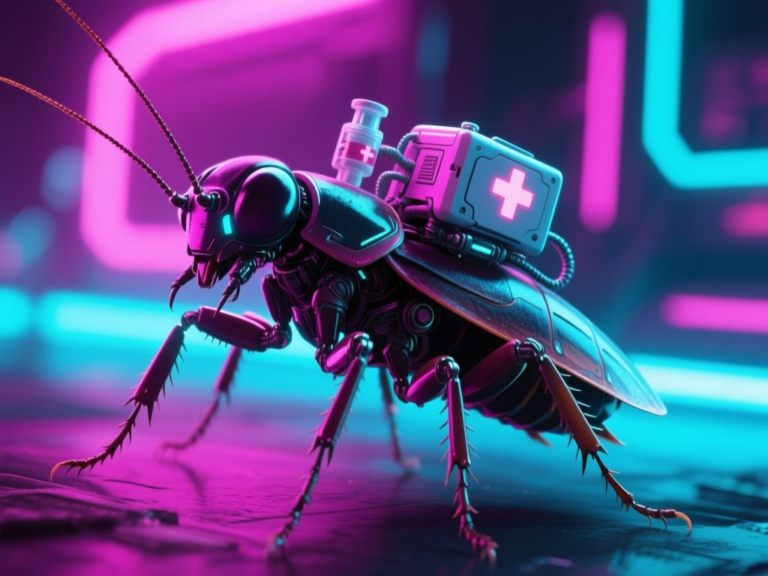
In a remarkable leap beyond imitation, scientists have developed living robots known as neurobots, which are constructed from living cells that self-organize into functional systems. These innovative machines, reported in the journal Advanced Science, feature neurons that wire themselves into circuits, enabling them to exhibit complex behaviors.
What Are Neurobots?
Neurobots are engineered from various types of cells, including those that produce cilia, secrete mucus, and maintain osmotic pressure, akin to aquatic animals like frogs. This living assembly not only moves but also possesses a nervous system that connects to its surface cells, allowing for a level of internal control previously unseen in biological machines.
Advancements in Bioengineering
Developed by a team led by Tufts University biologist Michael Levin, neurobots represent a progression from earlier biological machines known as xenobots, which were primarily made from frog-derived tissues. While xenobots demonstrated basic movement and self-repair capabilities, their actions were largely mechanical. In contrast, neurobots integrate neural activity with movement, enabling them to explore their environment and respond to stimuli in more dynamic ways.
Implications for Future Applications
The potential applications for neurobots are vast, ranging from precision tissue repair to environmental monitoring. As researchers continue to refine these systems, they aim to develop anthrobots, which would incorporate human cells, thus extending the neurobot framework into human contexts. This could lead to living machines capable of adapting their behavior through guided learning, similar to trained animals.
Challenges and Future Directions
Despite the exciting prospects, significant technical challenges remain. The initial focus for commercial applications will likely be on simpler xenobots, which are being targeted for environmental sensing tasks such as aquaculture and pollutant detection. The hope is that these living robots can provide real-time insights into ecosystem health by responding to various environmental stressors.
As researchers delve deeper into the mechanisms that govern neurobots, they not only advance the field of bioengineering but also raise profound questions about the nature of biological organization itself. This pioneering work opens new avenues for understanding and harnessing the complexities of life.
This article was produced by NeonPulse.today using human and AI-assisted editorial processes, based on publicly available information. Content may be edited for clarity and style.