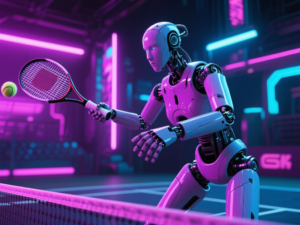
A humanoid robot has taken a significant step forward in the realm of robotics by learning to play tennis through direct interaction with human opponents. This innovative system, known as LATENT (Learns Athletic humanoid TEnnis skills from imperfect human motioN daTa), addresses the challenges of replicating the dynamic movements and skills demonstrated by human athletes.
Human players exhibit remarkable versatility and agility when playing tennis, making it difficult for robots to mirror these actions due to the absence of comprehensive motion data. LATENT aims to bridge this gap by utilizing imperfect human motion data as a foundation for training the robot.
Mechanisms of Learning
The learning process involves the robot observing and mimicking the actions of human players, which allows it to develop its own tennis skills over time. This method of learning is crucial, as it enables the robot to adapt to the nuances of the game, enhancing its ability to engage in competitive rallies.
Technological Innovations
At the core of this development is the integration of advanced AI techniques that facilitate the robot’s learning process. The system leverages a combination of visual and motion data to refine its skills, ensuring that the robot can respond effectively during matches. This approach not only improves the robot’s performance but also paves the way for future advancements in robotic learning.
Implications for Robotics
The successful implementation of LATENT signifies a notable achievement in the field of robotics, particularly in the context of athletic training and human-robot interaction. As robots become more adept at learning from human behavior, their potential applications in various domains, including sports training and rehabilitation, expand significantly.
In summary, the LATENT system exemplifies the ongoing evolution of humanoid robots, showcasing their ability to learn complex skills through interaction with humans. This development not only enhances the capabilities of robots but also opens new avenues for their integration into everyday activities.
This article was produced by NeonPulse.today using human and AI-assisted editorial processes, based on publicly available information. Content may be edited for clarity and style.