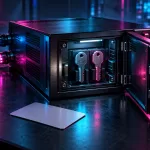
Microsoft has unveiled the Surface RTX Spark Dev Box, a compact desktop computer aimed at enabling software developers to run large AI models directly on their desks, thereby avoiding cloud computing costs. This launch, announced at Microsoft Build 2026, directly challenges the per-token pricing model that has characterized the AI industry since the introduction of ChatGPT.
Technical Specifications and Capabilities
The Dev Box is equipped with Nvidia’s new Blackwell-architecture RTX Spark processor and features 128 gigabytes of unified memory. According to Nvidia, this configuration can deliver up to one petaflop of AI compute power, allowing developers to load and interact with AI models exceeding 120 billion parameters without relying on cloud API calls. Pavan Davuluri, Microsoft’s executive vice president of Windows and Devices, emphasized the importance of context for model effectiveness, highlighting the need for sufficient memory to handle larger models.
Strategic Shift in AI Development Economics
The introduction of the Dev Box comes at a time when the economics of AI development have become a critical concern for businesses. Companies are facing unpredictable cloud GPU expenses that can escalate rapidly with frequent model iterations. Microsoft positions the Dev Box as a solution to alleviate this financial pressure, allowing developers to reserve cloud resources for more complex tasks while managing routine workloads locally.
Design Innovations and User Experience
The technical architecture of the Dev Box reflects a focus on sustained performance, crucial for lengthy AI workloads. The device integrates an ultra-efficient ARM-based CPU with a Blackwell-generation RTX GPU, consolidating multiple components into a single chip with a unified memory pool. This design allows for the handling of larger models that typically require specialized cloud GPU instances.
Additionally, the Dev Box is pre-configured with Windows 11 Pro optimized for development, featuring essential tools like Visual Studio Code and Python already installed. This streamlined setup aims to reduce the time developers spend configuring their machines, facilitating quicker transitions from unboxing to coding.
Market Positioning and Future Considerations
While the Surface RTX Spark Dev Box is positioned against existing compact desktops like Apple’s Mac Mini, Microsoft claims a performance advantage due to its architectural design and compatibility with the widely adopted CUDA ecosystem. The Dev Box is part of a broader three-tier hardware strategy that includes the Surface Laptop Ultra and the DGX Station for Windows, targeting various segments of AI development needs.
Ultimately, the success of the Dev Box will depend on its real-world performance, pricing, and the willingness of enterprises to invest in local hardware as an alternative to cloud solutions. Microsoft’s strategic pivot suggests a recognition of the unsustainable nature of current cloud pricing models in AI development.
This article was produced by NeonPulse.today using human and AI-assisted editorial processes, based on publicly available information. Content may be edited for clarity and style.
Original source: venturebeat.com