NASA Unveils $20 Billion Plan for Permanent Moon Base by 2033

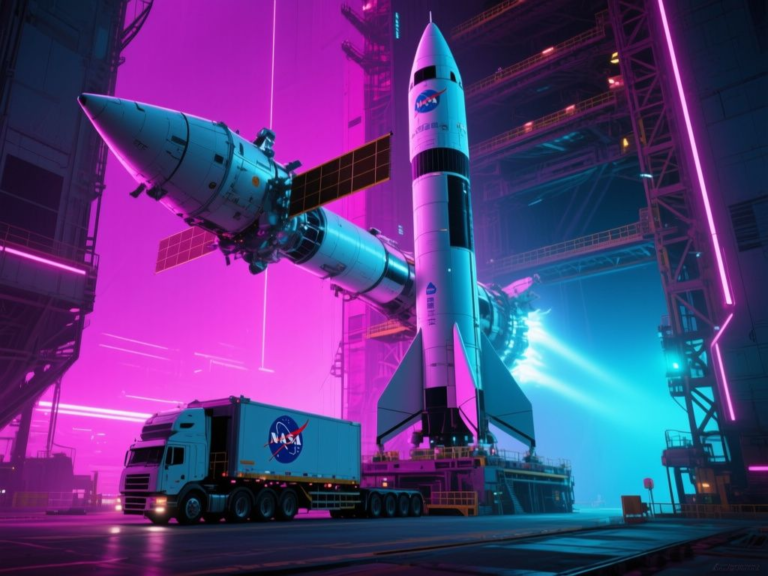
NASA has announced an ambitious $20 billion initiative to establish a permanent lunar base by 2033, focusing on infrastructure, nuclear power systems, and frequent crewed missions.

SpaceX, Blue Origin, NASA, ESA, cohetes, cargas, exploración lunar/Marciana.
NASA has announced an ambitious $20 billion initiative to establish a permanent lunar base by 2033, focusing on infrastructure, nuclear power systems, and frequent crewed missions.

NASA is developing innovative technologies to detect Earth-like exoplanets by observing reflected light, overcoming challenges posed by bright stars.

The EMERGE hackathon at the University of Florida brought together diverse participants to utilize NASA's GLOBE Observer app for environmental monitoring.

NASA's Landsat satellites reveal a stunning display of wildflowers in California's Carrizo Plain, showcasing the impact of recent weather patterns on vegetation growth.

The restoration of Hangar One, a significant landmark in California's aviation history, has been completed, preserving its historical integrity while modernizing its structure.

In a significant advancement for satellite internet, SpaceX successfully launched its 30th batch of Starlink satellites, enhancing its constellation in low Earth orbit.

NASA's X-59 aircraft successfully conducted its second flight, gathering valuable data despite an early landing due to a technical issue.

NASA's simulations using the LAVA framework have refined the launch conditions for the Artemis II mission, ensuring optimal performance and safety.
NASA's Space Launch System rocket and Orion spacecraft are en route to the launch pad, setting the stage for the Artemis 2 mission, scheduled for April 1.

The upcoming Starlink 10-33 mission will deploy 29 new satellites, expanding the megaconstellation to over 10,000 spacecraft in low Earth orbit.



