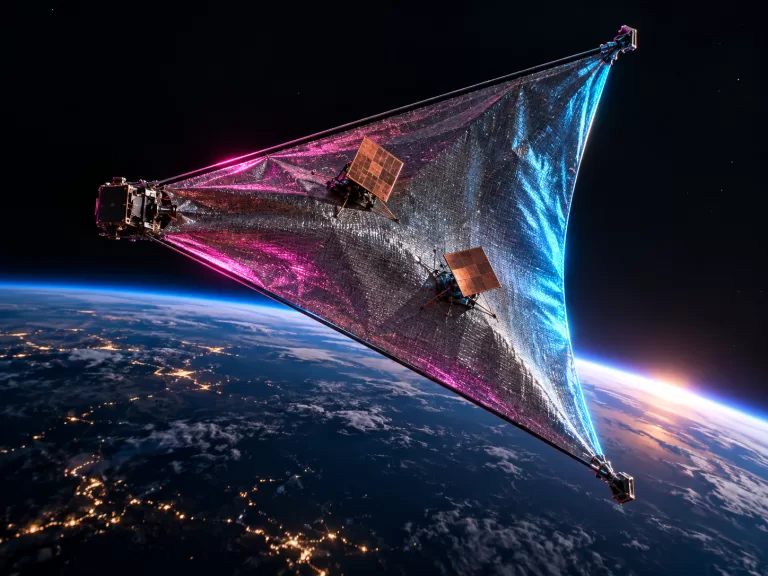
SpaceX is gearing up for its 35th Starlink mission of 2026, scheduled to launch on a Falcon 9 rocket from Cape Canaveral Space Force Station. The Starlink 10-33 mission aims to add 29 Starlink V2 Mini satellites to the existing low Earth orbit megaconstellation, which now comprises over 10,000 spacecraft.
Launch Details
Liftoff is targeted for 10:20 a.m. EDT (1420 UTC) from Space Launch Complex 40. The Falcon 9 rocket will ascend on a north-easterly trajectory upon launch. Live coverage of the event will commence approximately one hour before liftoff.
Weather Conditions
The 45th Weather Squadron has provided a mixed forecast for the launch window. Initial predictions indicate a 75 percent chance of favorable conditions at the start of the launch window, decreasing to 60 percent by its conclusion. Meteorologists have noted that while dry conditions are expected, coastal showers could develop, posing a potential risk to the launch. Additionally, mid-level clouds may approach the area, possibly impacting visibility during the launch.
Booster and Landing Operations
The mission will utilize the Falcon 9 first stage booster designated B1077, marking its 27th flight. This booster has previously supported missions such as NASA’s Crew-5 and CRS-28. Approximately 8.5 minutes post-liftoff, B1077 is set to land on the drone ship ‘Just Read the Instructions’ in the Atlantic Ocean. If successful, this will represent the 154th landing on this vessel and the 588th booster landing overall.
Satellite Deployment
The 29 Starlink satellites will be deployed from the rocket’s upper stage a little over an hour after liftoff, further enhancing the capabilities of the Starlink network.
This article was produced by NeonPulse.today using human and AI-assisted editorial processes, based on publicly available information. Content may be edited for clarity and style.
Original source: spaceflightnow.com