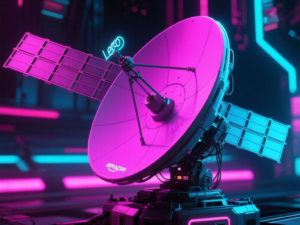
Amazon is preparing to launch its satellite-based internet service, known as Leo, with a target date set for mid-2026. CEO Andy Jassy announced this in his annual letter, highlighting that Leo is expected to provide download speeds reaching up to 1Gbps, significantly surpassing the current offerings from competitors like Starlink.
While specific details regarding the service’s features and infrastructure remain sparse, Jassy mentioned that select partners have already begun testing Leo. This early access suggests that Amazon is actively refining the service ahead of its official rollout.
In addition to high-speed internet, Amazon is positioning Leo as a cost-effective solution with seamless integration into its existing ecosystem of products. This strategic move could appeal to users looking for a satellite internet provider distinct from those associated with Elon Musk.
However, Amazon faces challenges in catching up with its satellite deployment timeline, as it currently trails behind other providers in this competitive landscape.
Other Notable Developments
In related news, Dyson has unveiled its first handheld fan, which features a motor capable of spinning at 65,000 RPM. This innovation aims to enhance airflow efficiency in a compact design.
JBL has also released the Live 780NC and 680NC headphones, which have received mixed reviews for their performance. Meanwhile, Sony is teasing its next-generation True RGB Mini LED TV technology, which promises to advance the capabilities of Mini LED displays.
On the laptop front, ASUS has introduced the ZenBook A16, a 16-inch ultraportable powered by Qualcomm’s Snapdragon X2 Elite. This model is designed to improve upon the previous ZenBook A14, addressing prior shortcomings.
Social Media Regulations and Device Support Changes
In regulatory news, Greece plans to implement a ban on social media access for children under 15, starting in 2027, due to concerns about the impact of social media on youth mental health.
Additionally, Amazon has announced it will discontinue support for older Kindle and Fire tablet models manufactured in 2012 or earlier, effective May 20. Users of these devices will lose the ability to purchase or download new content, although previously downloaded titles will remain accessible.
This article was produced by NeonPulse.today using human and AI-assisted editorial processes, based on publicly available information. Content may be edited for clarity and style.
Original source: engadget.com