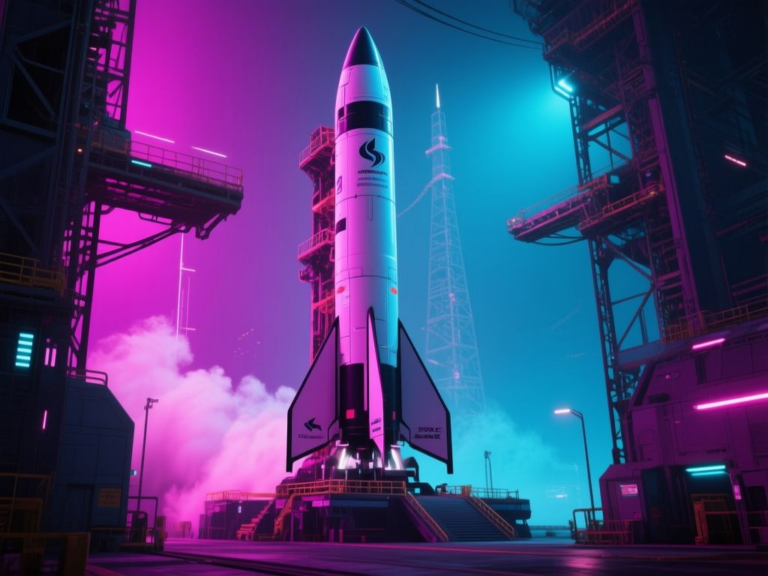
The Artemis II mission has reached a significant milestone as its Orion spacecraft is now positioned on Launch Pad 39B at NASA’s Kennedy Space Center in Cape Canaveral, Florida. This marks a pivotal moment in NASA’s efforts to return humans to the Moon.
Captured in a photograph taken on January 17, 2026, the Orion spacecraft is fully integrated with its second stage, which includes the Orion Crew Module, the European Service Module, the Launch Abort System, and the spacecraft adapter. The upper section of the Space Launch System (SLS), NASA’s next-generation super-heavy launch vehicle, is also visible, poised to send crewed missions beyond Low Earth Orbit (LEO).
Testing and Preparations Underway
Following its rollout from the Launch Assembly Bay, NASA has been rigorously testing the Orion spacecraft and its first stage booster. This includes a critical “wet dress rehearsal” conducted on February 3, 2026, which involved the successful loading and unloading of cryogenic propellant into the rocket. The rehearsal spanned approximately 49 hours, commencing on January 31 at 08:13 p.m. EST.
Cold temperatures initially delayed the tanking operations, necessitating adjustments to bring the propellant interfaces to acceptable temperatures. Ground teams successfully filled all tanks in both the core stage and the interim cryogenic propulsion stage. However, the countdown was paused shortly before completion due to a spike in the liquid hydrogen leak rate, and a valve associated with the Orion crew module’s hatch pressurization required retorquing, causing further delays.
Launch Timeline Adjustments
NASA has updated the launch window for Artemis II, now targeting March 2026 as the earliest launch opportunity. This adjustment allows ground teams to analyze data from the tanking operations and conduct another rehearsal before the flight test.
Mission Objectives and Future Plans
The Artemis II mission will be the first crewed flight of the program, lasting 10 days and involving a circumlunar flight that will take the crew around the Moon without landing, ultimately returning them to splashdown in the Pacific Ocean. This mission aims to validate the launch system and spacecraft, while also testing communication technologies that will support future long-duration lunar missions. This includes deploying CubeSats in lunar orbit to relay optical transmissions from the far side of the Moon back to Earth.
Additionally, Artemis II will evaluate essential technologies for deep-space exploration, such as life support systems, avionics, power systems, and advanced thermal protection. Looking ahead, NASA plans to launch Artemis III by 2027, contingent upon the completion of a Human Landing System (HLS) that will enable a two-person crew to land on the Moon for extended operations.
Ultimately, NASA’s long-term vision is to establish a regular cadence of lunar missions, paving the way for a sustained program of lunar exploration and development.
This article was produced by NeonPulse.today using human and AI-assisted editorial processes, based on publicly available information. Content may be edited for clarity and style.