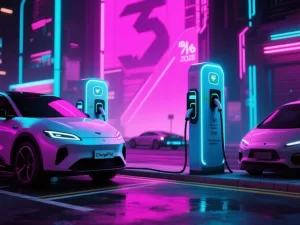
Electric vehicle adoption continues to advance, but the charging network is not expanding at the same pace. Analysts reported that more than 1.8 million EVs had been sold between the start of this year and the end of August, while a new report from ChargePoint indicates that charging demand is growing faster than charger availability.
Sessions outpace installations
ChargePoint’s data for 2025 shows a 34 percent increase in charging sessions, compared with only a 16 percent increase in new charger installations. The figures describe a widening gap between use of existing infrastructure and the rate at which additional equipment is being deployed.
ChargePoint CEO Rick Wilmer said the company continues to receive requests for charging proposals and reported quarter-over-quarter growth in its most recent reported quarter. He also pointed to rising demand for used EVs and an EV retention rate of 96 percent, saying drivers whose leased vehicles enter the used market are choosing another EV rather than returning to gasoline vehicles.
The workplace charging threshold
Most of ChargePoint’s utilization data comes from workplace charging. For a standard five-day, eight-hour-a-day workplace scenario, Wilmer said utilization above 30 percent can leave arriving drivers unable to find an open charger.
His description highlights a feedback loop within workplaces: employers add chargers in response to employee demand, but access to workplace charging can encourage more employees to buy EVs. Once usage rises above the 30 percent threshold, drivers may face more difficulty finding an available connection than before the chargers were installed.
Lower-cost bidirectional charging
ChargePoint has developed a new range of cheaper and more powerful Level 2 chargers for North America. These are 240 V AC chargers, and the company has partnered with Eaton to use smart-breaker technology for bidirectional charging.
The goal includes a lower-cost vehicle-to-home system that could power a house during an outage. Wilmer said more advanced applications, such as selling energy back, would also be possible, but he described basic backup power as an important use case.
What vehicle-to-grid still requires
Wilmer said broader vehicle-to-grid adoption will require standardization across the automotive industry and electrical utilities. He also identified a hardware constraint: most vehicles currently on the market support only DC bidirectional charging.
Because a home DC bidirectional system is expensive and physically large, ChargePoint says vehicles need to become AC bidirectional-capable for smaller, more practical home installations. The source does not establish a timeline for that transition or specify how many vehicles currently support the capability.
Original source: arstechnica.com
This article was produced by NeonPulse.today using human and AI-assisted editorial processes, based on publicly available information. Content may be edited for clarity and style.