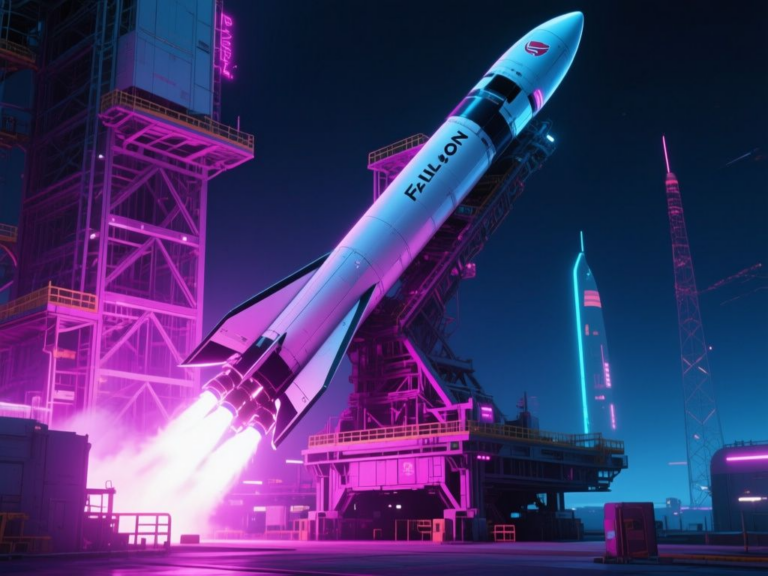
Rocket Lab’s highly anticipated Neutron rocket is facing potential delays, with its inaugural launch now likely to slip into 2027. The company disclosed in a filing to the U.S. Securities and Exchange Commission (SEC) ahead of its second quarter 2026 earnings call that significant milestones have been achieved in the Neutron program, yet various qualification tests remain ongoing.
The company stated, “Production of the Stage 1 tank is currently aligned with the target delivery of Neutron to the launch pad in Q4 2026.” However, they cautioned that the window for an end-of-year launch is narrowing. The launch schedule is being carefully balanced with the goal of ensuring that Neutron is fully prepared for high-cadence production and operations following its first flight.
Development Challenges and Milestones
Rocket Lab’s Neutron rocket, which stands at 43 meters (141 feet) tall and is powered by liquid methane, has been under development since its announcement in March 2021. The rocket features a reusable first stage booster, designed with actuating payload fairing halves that remain attached after the second stage and payload are deployed.
A setback occurred on January 21, when the first stage fuel tank ruptured during a hydrostatic pressure trial, resulting in a rescheduling of the planned debut from mid-2026 to late 2026. During the recent earnings call, Rocket Lab’s founder and CEO, Peter Beck, emphasized the importance of reusability in achieving a reliable launch cadence, stating, “It’s really about how do we get to flight ten in the shortest time possible.” He noted that the timeline for the first flight is being adjusted to ensure that subsequent flights do not require re-qualification of systems.
Upcoming Testing and Contracts
Beck identified integrated static fire testing at the launch pad in Virginia as the most critical milestone with the highest risk. This test involves igniting fully fueled vehicles on the pad, a process that carries inherent risks, as highlighted by recent incidents in the industry.
Looking ahead, Rocket Lab has secured a $397 million contract with the U.S. Space Force for the Space-Based Airborne Moving Target Indicator (SB-AMTI) program, although specific launch dates for this initiative have not yet been announced. Additionally, Neutron has been selected for a dedicated launch by Kepler Communications, marking its first dedicated flight to deploy multiple satellites into low Earth orbit no earlier than 2028.
Market Position and Future Prospects
Beck described the contract with Kepler as a strong indicator of Neutron’s potential to serve as a reliable medium-lift launch option, alongside established vehicles like SpaceX’s Falcon 9. He expressed confidence in Rocket Lab’s track record with its Electron rocket and other initiatives, asserting that Neutron will help alleviate industry bottlenecks and provide the necessary launch capacity for years to come.
This article was produced by NeonPulse.today using human and AI-assisted editorial processes, based on publicly available information. Content may be edited for clarity and style.
Original source: spaceflightnow.com