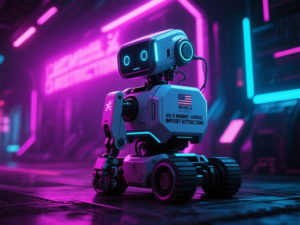
The landscape of robotics is shifting as the U.S. Federal Communications Commission (FCC) takes a decisive step to limit the import of foreign mobile robots. On July 28, the FCC expanded its ‘Covered List’ to include mobile robots weighing over 2 kilograms, declaring them a potential threat to national security.
This decision stems from a Department of Defense (DOD) initiative aimed at reducing reliance on foreign technology, particularly from China. The FCC’s announcement states that all foreign-produced advanced robotic devices pose an unacceptable risk unless the DOD determines otherwise. This categorization raises significant implications for the robotics industry, particularly among allied nations.
Understanding the Restrictions
Defined as mobile systems with onboard sensing, communication capabilities, and a degree of autonomy, ‘advanced robotic devices’ are now subject to stringent import regulations. Notably, systems under 2 kg and those communicating at less than 200 kilobits per second are exempt, allowing for some flexibility in product development.
These restrictions apply only to new devices; existing certified products remain unaffected. The U.S. government cites cybersecurity threats to critical infrastructure as a primary justification for these measures, emphasizing the need for a domestic supply chain in both economic and military contexts.
Global Reactions and Implications
The announcement has elicited mixed reactions from the robotics community. Some U.S. companies, like Boston Dynamics, view the ban as an opportunity to strengthen their market position. Brendan Schulman, the company’s vice president of policy, expressed optimism about the potential for future policies to shape the industry positively.
Conversely, concerns arise regarding the impact on international trade. Companies from third-party nations may continue to favor Chinese products, as seen in other tech sectors. Nic Radford, CEO of Persona, suggests that U.S. customers prioritize technology that can be audited and supported locally, potentially mitigating some impacts of the ban.
Future Pathways for Robotics Firms
To navigate these new regulations, foreign manufacturers must submit detailed plans to establish or expand production in the U.S. by January 1, 2028. This requirement poses challenges, especially given China’s significant role in the global robotics supply chain.
As the industry adapts, the broader implications of these restrictions remain to be seen. While some argue that a ban may enhance cybersecurity and foster a more competitive environment, others caution that such measures could stifle innovation and collaboration within the robotics ecosystem.
This article was produced by NeonPulse.today using human and AI-assisted editorial processes, based on publicly available information. Content may be edited for clarity and style.
Original source: spectrum.ieee.org