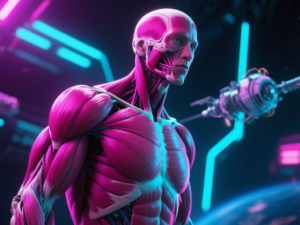
NASA astronaut Nicole Stott’s experience on the International Space Station (ISS) highlights a significant challenge faced by astronauts: muscle atrophy due to the absence of gravity. This phenomenon is at the core of new research conducted by Dr. Khaled Kamal and his team at Iowa State University, supported by Iowa NASA EPSCoR.
Dr. Kamal, who joined Iowa State in 2024 after over a decade with the European Space Agency and NASA, investigates how microgravity disrupts the signaling pathways essential for maintaining muscle health. His research focuses on processes such as mechanotransduction, which involves how cells sense and respond to physical forces, as well as redox biology and intercellular communication within the musculoskeletal system.
Research Focus and Methodology
The primary concern of Kamal’s work is muscle atrophy experienced by astronauts during extended missions aboard the ISS. As space missions progress towards the Moon and Mars, understanding the mechanisms behind this muscle wasting becomes increasingly vital. Dr. Kamal states, “We try to understand how spaceflight induces this muscle atrophy at the molecular and cellular level; the payoff is practical as much as scientific. Understand the mechanism, and a countermeasure becomes possible.”
To study the effects of microgravity on muscle, Kamal’s lab developed a unique hindlimb unloading rodent model. This model simulates some conditions of microgravity by suspending the hind limbs of rodents, effectively silencing the communication between muscle and gravity. This innovative approach allows researchers to observe how muscle tissue reacts to the absence of gravitational signals in real time, providing a platform for testing potential therapies aimed at preserving muscle health.
Broader Implications of the Research
The implications of this research extend beyond space exploration. The molecular pathways affected by microgravity are similar to those involved in age-related sarcopenia and Duchenne muscular dystrophy, a genetic disorder that leads to muscle degeneration from childhood. Dr. Kamal is actively seeking new biomarkers, including extracellular vesicle signatures and mechanosensitive signaling systems, which could serve as monitoring tools and treatments for both astronauts on long missions and patients on Earth.
Collaborative Efforts and Future Directions
The lab has become a hub for collaboration, attracting experts from various fields, including animal science, machine learning, engineering, and cell biology. Among the team is PhD student Hassan, who joined in spring 2025, motivated by the challenge of recreating astronauts’ microgravity experiences on Earth. Dr. Kamal envisions expanding this collaborative pipeline, emphasizing that NASA requires biologists and physiologists as much as it needs engineers. Iowa’s growing capacity in space life sciences is beginning to yield promising results.
This article was produced by NeonPulse.today using human and AI-assisted editorial processes, based on publicly available information. Content may be edited for clarity and style.