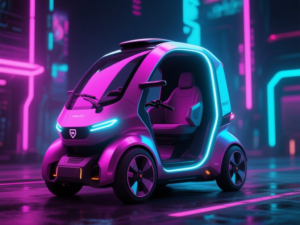
The Amble One is an innovative electric vehicle (EV) designed for short-range mobility, emerging from a team with significant automotive and tech experience. With a price point of $25,000, this vehicle is tailored for environments where traditional cars may be impractical, such as coastal paths and private estates.
Design and Specifications
Characterized as a street-legal electric buggy, the Amble One boasts a range of over 60 miles and a top speed of 40 mph. It can be charged in five hours using any standard home socket and maintains a curb weight under 450 kilograms (992 pounds), which is crucial for its classification as an L7e vehicle in Europe. This classification allows it to operate on public roads without being categorized as a car.
Engineering Challenges
Adrien Roose, the CEO and cofounder, highlighted the engineering challenges involved in keeping the weight under the specified limit, noting that simply shrinking a car design does not yield a functional vehicle. The Amble One features an open, doorless design that contributes to its lightweight structure, differentiating it from competitors.
Material Choices and Inspirations
The design incorporates materials such as aluminum, leather, cotton, and cork, with a flat windscreen reminiscent of the Mercedes G-Wagon. The dashboard is designed to accommodate standard motorcycle accessories, enhancing its utility. Notably, the design is inspired by the NASA lunar rover, with a focus on simplicity and visibility of the vehicle’s platform.
Future Developments
The Amble One is configurable, with features like foldable rear seats and options for weatherproofing. A second model, the Amble Two, is in development and aims to offer more conventional features while maintaining the brand’s focus on purpose-driven design. The company has already secured orders from various hospitality properties, with deliveries for the Amble One expected to begin in mid-2027 for businesses and in 2028 for consumers.
This article was produced by NeonPulse.today using human and AI-assisted editorial processes, based on publicly available information. Content may be edited for clarity and style.