SpaceX’s Starship launch system successfully lifted off from its Texas launch pad for a suborbital flight test, deploying operational next-generation Starlink satellites for the first time. This milestone occurred during the rocket’s 13th flight test, which aimed to rectify issues encountered in previous attempts.
The 407-foot-tall, two-stage rocket launched at 5:51 p.m. CT (10:51 p.m. UTC), with all 33 Raptor engines igniting on the Super Heavy booster. During ascent, the rocket achieved a record for maximum dynamic pressure, known as Max-Q. Following liftoff, the Starship upper stage, referred to as Ship, separated from the booster, which then performed a controlled splashdown in the Gulf of Mexico. SpaceX launch commentator Dan Huot noted that not all engines operated as intended, leading to a splash that was unexpectedly vigorous but ultimately safe.
Satellite Deployment and Communication Tests
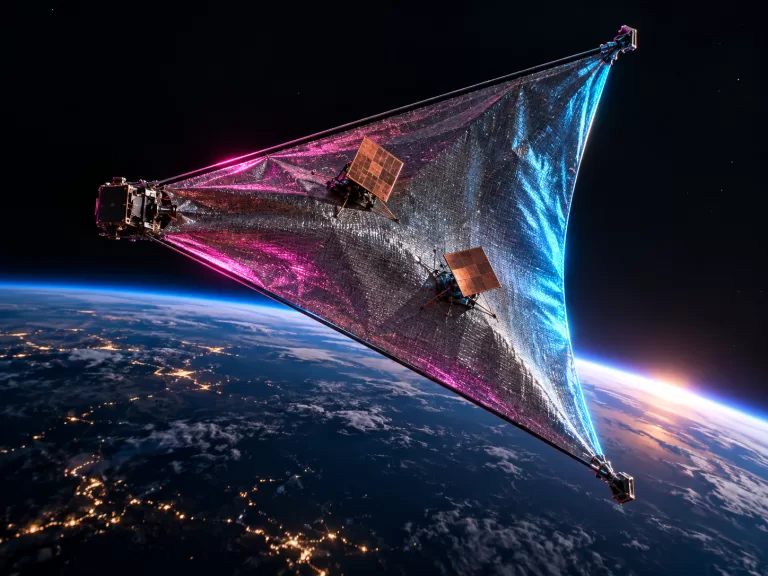
In the next phase of the test, Ship deployed 20 operational Starlink V3 satellites using a system nicknamed the “Pez Dispenser.” For approximately 20 minutes, SpaceX engineers conducted tests to evaluate the deployment of solar arrays and the satellites’ ability to communicate with other spacecraft in the telecom network via laser systems. SpaceX engineer Kate Tice confirmed, “Not only were we able to make contact with all 20, but we also made comms over lasers with all of them as well. So, that is awesome.” Although the satellites were not intended to remain in orbit, the data collected during this phase will inform future deployments of Starlink V3 satellites.
Technological Advancements
The Starlink V3 satellites are designed to achieve download speeds of up to 1 terabit per second, representing a significant technological leap over the V2 satellites that currently comprise the bulk of the Starlink constellation. The integration of V3 satellites into the network is expected to enhance Starlink’s capacity for direct-to-device services.
Successful Splashdown and Future Implications
After deploying the satellites, the upper stage executed a relight of one of its six Raptor engines mid-flight and descended through the atmosphere, culminating in a splashdown in the Indian Ocean. During descent, Ship’s heat shield endured intense plasma flashes, creating a visually striking display captured by in-space video transmitted via Starlink. The upper stage ultimately settled intact in the water, with Huot commenting, “That is a first. That is the softest splashdown we have ever had with a Starship there in the Indian Ocean. This is a dream scenario for the team that’s trying to get this heatshield data.” This flight test marked the second attempt of SpaceX’s enhanced Starship V3 rocket, following modifications made to address engine performance issues identified in earlier tests.
This article was produced by NeonPulse.today using human and AI-assisted editorial processes, based on publicly available information. Content may be edited for clarity and style.
Original source: universetoday.com