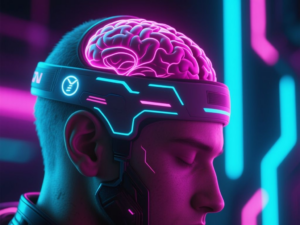
Beacon Biosignals is at the forefront of mapping brain activity during sleep, a venture founded by Jake Donoghue, PhD ’19, and former MIT researcher Jarrett Revels. This innovative company is developing an AI-driven platform aimed at diagnosing and treating neurological disorders.
The core of Beacon’s technology lies in a lightweight headband that employs electroencephalogram (EEG) technology. This device allows for the collection of brain activity data while individuals sleep in the comfort of their own homes. By processing this data through advanced machine-learning algorithms, Beacon aims to monitor the effects of new treatments, identify early signs of disease progression, and facilitate the formation of patient cohorts for clinical trials.
Transforming Sleep into Diagnostic Data
“There’s a step-change in what becomes possible when you remove the sleep lab and bring clinical-grade EEG into the home,” states Donoghue, who serves as Beacon’s CEO. This shift transforms sleep from a constrained, facility-based test into a scalable source of high-quality data that can significantly enhance diagnostics, drug development, and longitudinal brain health.
Beacon has partnered with pharmaceutical companies to expedite the delivery of its findings to patients. The company’s FDA 510(k)-cleared medical device has already been utilized in over 40 clinical trials globally, targeting conditions such as major depressive disorder, schizophrenia, narcolepsy, Alzheimer’s disease, and Parkinson’s disease.
Building a Foundation Model of the Brain
With each deployment of its technology, Beacon gains deeper insights into brain function, which are crucial for constructing a “foundation model” of the brain. Donoghue emphasizes that the dataset necessary to revolutionize brain health is still being created. “Our platform can characterize the heterogeneity of disease progression, generating dynamic insights that are impossible to fully capture through static modalities like sequencing or imaging,” he explains.
Beacon’s approach focuses on the brain’s electrical activity, which is influenced by synaptic plasticity. By tracking brain function across various diseases, the company aims to uncover novel subgroups of diseases and map their evolution over time.
Enhancing Early Detection and Treatment
In addition to its core technology, Beacon has expanded its reach by acquiring a sleep apnea testing company that serves over 100,000 patients annually in the U.S. This acquisition enhances access to comprehensive testing and strengthens Beacon’s platform.
In November, the company raised $97 million to further its mission. “The vision has always been to reach patients and help people at scale,” Donoghue asserts. The longitudinal record of brain function that Beacon is building could potentially allow for earlier detection of diseases like Parkinson’s, transforming routine testing into a foundation for new prognostic biomarkers.
This article was produced by NeonPulse.today using human and AI-assisted editorial processes, based on publicly available information. Content may be edited for clarity and style.