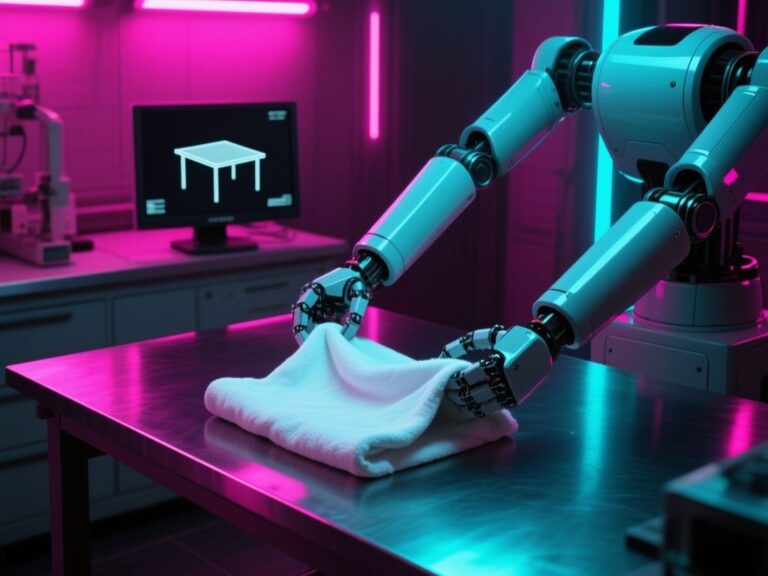
In a remarkable demonstration of robotic learning, Digit, a humanoid robot, has showcased its ability to dance without prior practice. This achievement is a testament to the advancements in AI and robotics, specifically in the realm of whole-body control capabilities.
Innovative Learning Techniques
The AI team behind Digit employs a combination of raw motion data sourced from motion capture, animation, and teleoperation methods. This data is utilized to teach Digit new skills through a process known as sim-to-real reinforcement training. This method allows the robot to acquire complex movements rapidly, enabling it to perform dance routines almost overnight.
GEN-1: A New Benchmark in Robot Learning
Accompanying Digit’s dance capabilities is the introduction of GEN-1, a significant milestone in robot learning. This model is touted as the first general-purpose AI capable of mastering simple physical tasks with impressive efficiency. It boasts an average success rate of 99% on tasks that previously achieved only 64%, and it completes these tasks approximately three times faster than existing models. Remarkably, it requires only one hour of robot data to achieve these results, paving the way for broader commercial applications.
Open-Source Contributions
In a move to further enhance the field of humanoid robotics, Unitree has made available the UnifoLM-WBT-Dataset, a high-quality dataset focused on whole-body teleoperation in open environments. Released on March 5, 2026, this dataset aims to provide comprehensive coverage of various scenarios, task complexities, and manipulation diversity, ensuring continuous updates to support ongoing research.
Implications for Future Robotics
The advancements demonstrated by Digit and the introduction of GEN-1 signify a pivotal moment in the development of humanoid robots. These technologies not only enhance the capabilities of robots in performing physical tasks but also open new avenues for interaction and cooperation between humans and machines. As these systems evolve, they hold the potential to redefine the landscape of robotics in everyday applications.
This article was produced by NeonPulse.today using human and AI-assisted editorial processes, based on publicly available information. Content may be edited for clarity and style.
Original source: spectrum.ieee.org