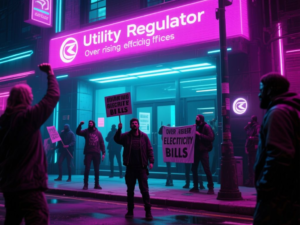
In January, protestors gathered outside Ohio’s utility regulator offices, expressing their frustration over escalating electricity rates. This scene, once unimaginable due to the complexity of utility costs, reflects a growing national concern as consumers seek clarity on rising bills.
Consumer Frustration and Rising Rates
Steve Van Kuiken, a pastor in Columbus, voiced the sentiment of many, stating, “The working class is really getting squeezed, and everything’s going up.” According to the Energy Information Administration, US residential electricity rates rose by 5 percent in 2025 compared to the previous year, with some states experiencing even higher increases. This surge follows a period of relatively stable rates, prompting consumers to question the reasons behind these hikes.
Factors Contributing to Higher Costs
Several factors contribute to the rising electricity costs. Utilities have significantly increased spending on infrastructure, driven partly by heightened demand from data centers. Additionally, the increase in natural gas prices has particularly affected states like Pennsylvania, which rely heavily on gas for electricity generation. State policies mandating renewable energy benchmarks further complicate the situation, especially in the Northeast and Mid-Atlantic regions.
Utility Companies and Financial Incentives
Charles Hua, founder of PowerLines, highlighted the financial motivations behind utility companies’ infrastructure investments. Utilities earn profits through capital expenditures on power plants and substations. With demand increasing, companies are leveraging this growth to seek cost recovery and returns on new investments. However, this system raises questions about whether it leads to unnecessary costs for consumers.
The Broader Economic Context
Electricity prices have become a significant political issue, especially with the upcoming midterm elections. The Edison Electric Institute noted that while price increases align with inflation in many states, the national average is skewed by a few states with steep hikes. As the average monthly electricity bill for US households reached $151.89 in 2025, up 7 percent from the previous year, the financial burden on consumers is evident.
With utilities requesting nearly $31 billion in rate increases in 2025—more than double the previous year’s requests—the landscape for electricity pricing is shifting dramatically. As state regulators grapple with these challenges, the implications for consumers and the energy market are profound.
This article was produced by NeonPulse.today using human and AI-assisted editorial processes, based on publicly available information. Content may be edited for clarity and style.