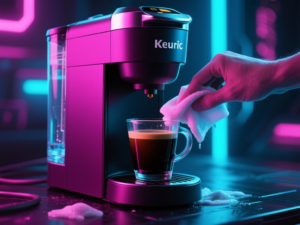
Maintaining your Keurig coffee maker is essential for ensuring both the longevity of the machine and the quality of your coffee. Frequent use can lead to buildup and residue that may affect flavor and performance. Here’s a detailed guide on how to effectively clean your machine.
Daily Maintenance
For routine upkeep, start by wiping down the exterior of your Keurig with a damp cloth. The K-Cup holder and needle area should be cleared of any loose debris, such as coffee grounds. Exercise caution around the needle, as it is sharp. Some models include a needle cleaning tool, while others can utilize a paper clip for similar purposes.
Remove the drip tray and water reservoir for washing. Use hot, soapy water, but avoid excessive dish soap to prevent residue buildup. If your machine includes a carafe, it can typically be washed by hand or placed in the dishwasher if it is dishwasher-safe. Allow these components to air dry or wipe them with a lint-free towel. Regularly replacing the water in the reservoir is recommended, especially if it has been stagnant. If your model features a water filter, replace it every two to three months, adhering to any maintenance reminders provided by the machine.
Internal Cleaning
To maintain the internal components, consider using a Keurig Rinse Pod to flush out oils or flavors that may linger, particularly after brewing flavored K-Cups. Running a hot water cycle occasionally is also beneficial, especially if the machine has not been used for several days.
Deeper Cleaning and Descaling
For a more thorough clean, it is advisable to descale your Keurig every three to six months, or more frequently if you notice mineral buildup or receive prompts from the machine. You can create a descaling solution using a mixture of equal parts white vinegar and water, running multiple brew cycles until the reservoir is empty. Allow the solution to soak for 20 to 30 minutes midway through the process. Afterward, perform several rinsing cycles with clean water until the vinegar scent dissipates. Alternatively, a dedicated descaling solution can be used, following the manufacturer’s instructions.
Regular deep cleaning is vital for maintaining your machine’s performance and ensuring your coffee remains flavorful.
This article was produced by NeonPulse.today using human and AI-assisted editorial processes, based on publicly available information. Content may be edited for clarity and style.