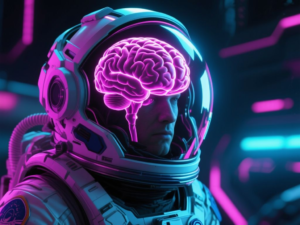
The impacts of space travel extend beyond the physical; new research indicates that astronauts return to Earth with lasting brain changes that complicate their reintegration into terrestrial life. This discovery raises serious concerns for the future of long-duration space exploration.
Published in the Proceedings of the National Academy of Sciences, the study led by physiologist Rachael Seidler from the University of Florida investigates how the brain is affected by varying durations of orbital missions. The findings confirm that even short missions lasting only a few weeks can alter brain structure, while longer flights result in modifications that persist for months post-landing.
Structural Changes in the Brain
The research focuses on the positioning of the brain within the skull, noting that the absence of gravity causes bodily fluids to redistribute, leading to measurable shifts in the brain’s location and orientation. The team found that these displacements do not uniformly affect all brain regions; some areas move in different directions, indicating a change in brain shape rather than merely a global positional shift.
Balance as a Key Concern
The analysis included brain imaging from 26 astronauts, comparing scans taken before and after their missions, alongside data from a ground-based experiment by the European Space Agency simulating microgravity. In the longest missions, brain changes were observed to be between two and three millimeters, a small yet significant variation.
The regions most impacted are associated with balance and sensorimotor control. Notably, the posterior insula, crucial for maintaining bodily stability, exhibited the most pronounced shifts, correlating with increased difficulties in regaining balance upon returning to Earth.
Implications for Future Missions
While no effects on intelligence or personality were detected, the researchers caution that the functional consequences are significant. “These findings are critical for understanding the effects of spaceflight on the brain and human behavior,” Seidler stated, emphasizing the need for further investigation into these changes.
As humanity prepares for long-duration missions to the Moon and Mars, these results necessitate a reevaluation of astronaut training and recovery strategies. Protecting the brain health of astronauts emerges as a crucial factor for ensuring safe and sustainable space travel in the future.
This article was produced by NeonPulse.today using human and AI-assisted editorial processes, based on publicly available information. Content may be edited for clarity and style.