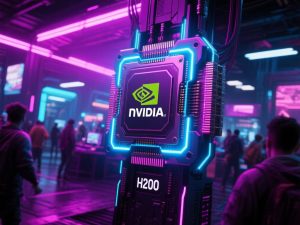
Nvidia has reportedly won the green light for exporting its H200 chips to China. This development comes at a time when the tech industry is closely monitoring the evolving landscape of semiconductor exports amid increasing scrutiny and regulations.
Details of the Approval
The approval for these exports is noteworthy, given the backdrop of heightened tensions between the United States and China over technology and trade. The H200 chips, which are designed for artificial intelligence applications, represent a significant advancement in computational power, making them highly sought after in various sectors.
Geopolitical Context
As governments around the world tighten their grip on tech exports, Nvidia’s ability to navigate these regulations successfully highlights its strategic positioning in the global market. The U.S. government has imposed various restrictions on semiconductor exports to China, particularly concerning advanced technologies that could enhance military capabilities. However, the approval for the H200 indicates a nuanced approach to these regulations.
Industry Implications
This export approval could have ripple effects throughout the tech industry, influencing not only Nvidia’s market position but also the competitive landscape among semiconductor manufacturers. As companies adapt to shifting regulations, the dynamics of AI development and deployment may also change, particularly in regions heavily reliant on these technologies.
The H200 chips are expected to play a crucial role in enhancing AI capabilities across various industries, from cloud computing to automotive technology. As Nvidia continues to push the boundaries of what these chips can achieve, their export to China could lead to further advancements and collaborations in the AI space.
This article was produced by NeonPulse.today using human and AI-assisted editorial processes, based on publicly available information. Content may be edited for clarity and style.