Exploring the Universe: The Nancy Grace Roman Space Telescope

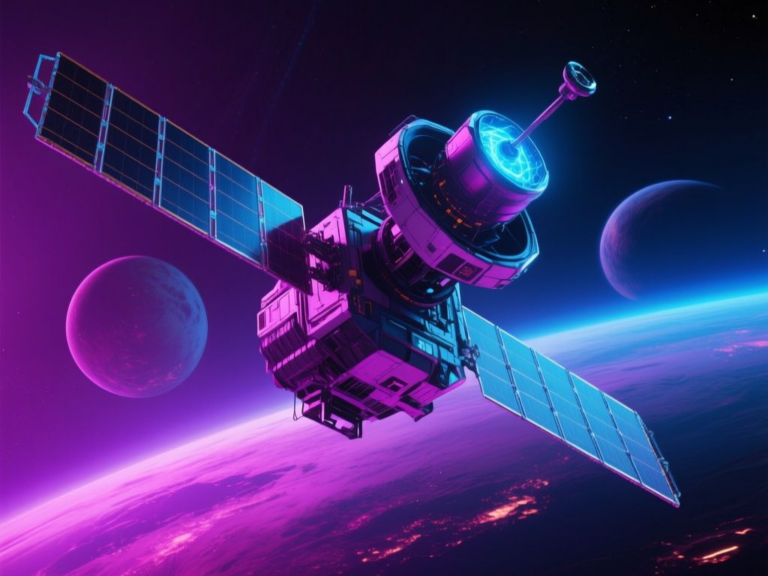
NASA's Nancy Grace Roman Space Telescope is set to revolutionize our understanding of dark energy, exoplanets, and dark matter, launching on August 30, 2026.

NASA's Nancy Grace Roman Space Telescope is set to revolutionize our understanding of dark energy, exoplanets, and dark matter, launching on August 30, 2026.

Recent research highlights how zodiacal dust in exoplanetary systems could obscure our ability to detect signs of life on other worlds.

NASA is exploring a groundbreaking concept to image the surfaces of exoplanets, potentially allowing us to map alien continents and oceans from light-years away.

NASA's Habitable Worlds Observatory (HWO) aims to revolutionize our understanding of potentially habitable exoplanets through advanced technology and meticulous planning.

The upcoming ESA mission PLATO aims to enhance our understanding of Venus-like exoplanets and their evolutionary pathways, potentially revealing the dynamics of planetary habitability.

Astronomers have utilized the James Webb Space Telescope to observe the twilight zones of the ultra-hot gas giant WASP-121b, revealing significant atmospheric differences between its day and night sides.

NASA's TESS has discovered a new planet, Gaia23bra b, utilizing gravitational microlensing, marking a significant advancement in exoplanet detection methods.

Astronomers have confirmed that the giant exoplanet WD 1856 b has survived the transition of its host star into a white dwarf, raising intriguing questions about planetary habitability.

NASA's Nancy Grace Roman Space Telescope has reached the Kennedy Space Center, marking a significant milestone in its prelaunch preparations, now set for August 30, 2026.

Researchers have identified two gas giant exoplanets, HD 114082 b and HD 114082 c, featuring the longest orbital periods of any known transiting exoplanets, located 311 light-years from Earth.