The Large Magellanic Cloud: A First-Time Visitor to the Milky Way?
Recent research suggests that the Large Magellanic Cloud may be making its first pass by the Milky Way, challenging previous theories about its orbital history.

Recent research suggests that the Large Magellanic Cloud may be making its first pass by the Milky Way, challenging previous theories about its orbital history.
A team of undergraduate students has identified one of the oldest stars in the Universe, SDSS J0715-7334, which migrated to the Milky Way from the Large Magellanic Cloud.

The James Webb Space Telescope (JWST) has provided unprecedented insights into the W51 starbirth region, revealing intricate details of star formation previously obscured by gas and dust.
Explore the enigmatic realm of black holes, where gravity reigns supreme and the laws of physics are stretched to their limits. This explainer delves into what we know, how they work, and the mysteries that continue to baffle scientists.
The NANOGrav collaboration's latest study reveals no evidence of gravitational waves from supermassive black hole binaries, yet it provides valuable constraints and insights into potential candidates.

New research reveals why planets orbiting binary star systems, reminiscent of Tatooine from Star Wars, are exceedingly rare.
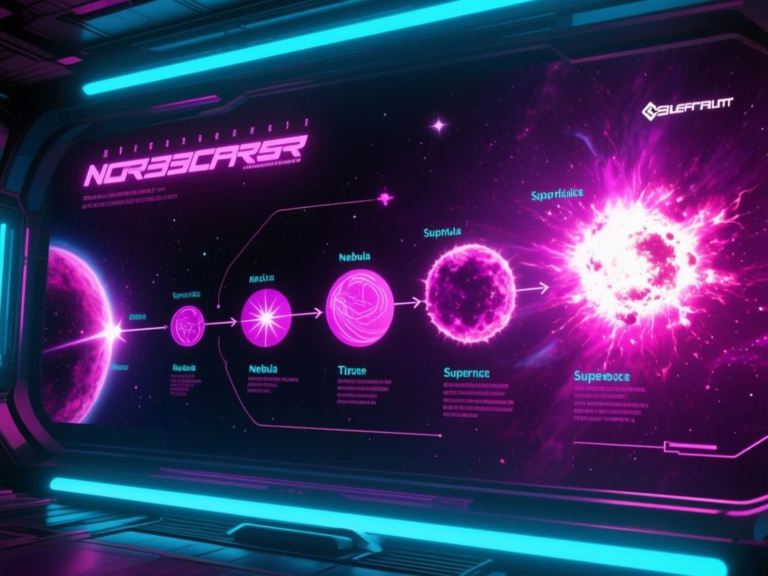
Explore the intricate life cycle of stars, from their formation in cosmic nurseries to their explosive deaths as supernovae, and the profound implications for the universe.
Recent research has revealed nonzero tidal love numbers in regular black holes, hinting at significant implications for our understanding of gravitational physics.