Weibo’s VibeThinker-3B Model Sparks Debate in AI Benchmarking

Sina Weibo's new AI model, VibeThinker-3B, challenges conventional wisdom on AI scaling, achieving benchmark scores that rival much larger competitors.

fundraising, adquisiciones, innovación, incubadoras
Sina Weibo's new AI model, VibeThinker-3B, challenges conventional wisdom on AI scaling, achieving benchmark scores that rival much larger competitors.
OpenAI is reportedly exploring significant price reductions for its AI models as competition with Anthropic intensifies, according to sources cited by the Wall Street Journal.

Emerge Career is on the hunt for a pioneering growth marketer to enhance its workforce development platform, focusing on low-income adults and those with past incarceration experiences.

Microsoft's AI division has gained the autonomy to pursue its own superintelligence projects, marking a significant shift in its AI strategy.
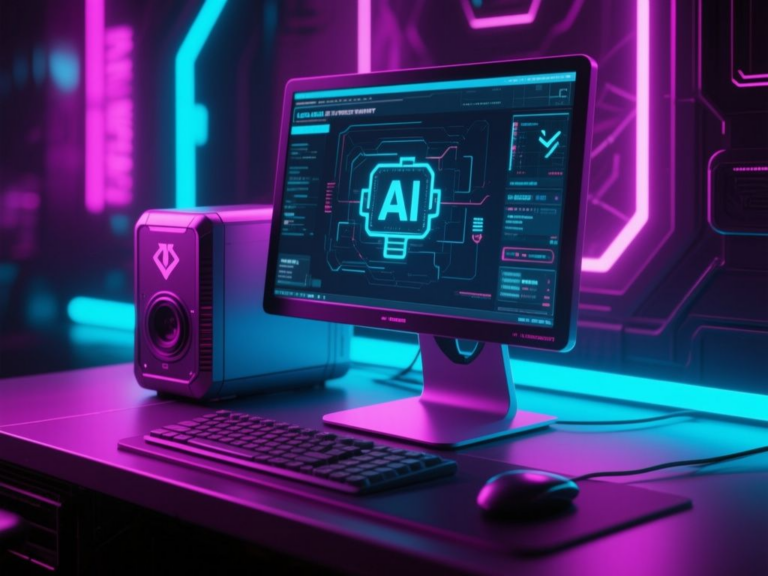
Microsoft has introduced the Surface RTX Spark Dev Box, a compact desktop designed for developers to run large AI models locally, challenging the prevailing cloud-based pricing model.

The Specification Website outlines essential technical features every website should incorporate, emphasizing standards and accessibility.

London's skyline is evolving with the introduction of free public roof terraces, driven by planning incentives for skyscraper developers.

Mistral AI has announced a significant expansion into industrial AI, a new data center initiative, and a rebranding of its consumer assistant, Vibe, at its inaugural conference in Paris.

Datacurve's new DeepSWE benchmark reveals significant disparities among AI coding models, positioning OpenAI's GPT-5.5 as the clear leader while exposing flaws in existing evaluation methods.

At its I/O developer conference, Google introduced Gemini 3.5 Flash, an AI model that could save enterprises over $1 billion annually by optimizing AI workloads.