Astronomers Uncover the Mysteries of Mira A’s Latest Outburst

A recent study reveals significant findings about Mira A, a prominent red giant star, including an unexpected mass-loss event that challenges existing theories.

A recent study reveals significant findings about Mira A, a prominent red giant star, including an unexpected mass-loss event that challenges existing theories.

The interstellar comet 3I/ATLAS has shown significant changes since its closest approach to the Sun, revealing a wealth of organic compounds and water as it awakens from billions of years of dormancy.
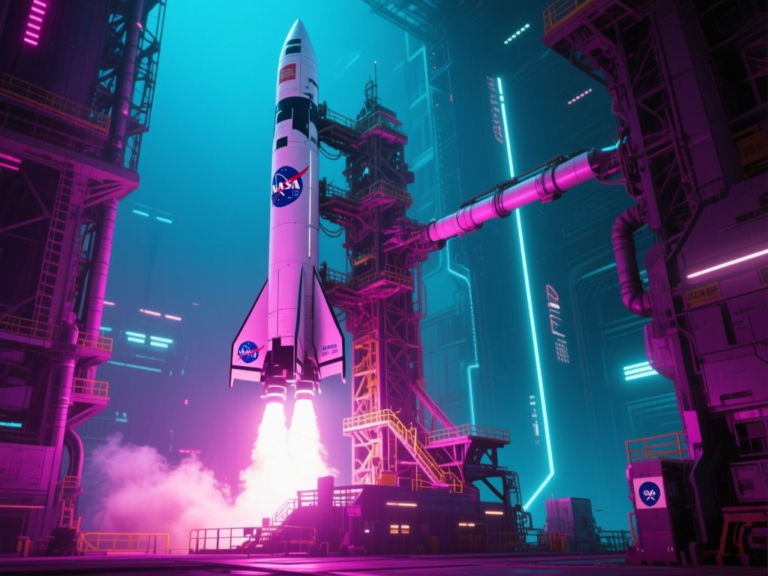
NASA is set to conduct a second full fueling test of its Space Launch System rocket, a crucial step in the Artemis 2 mission preparations. This operation aims to load over 700,000 gallons of propellant and validate critical systems.

NASA's Payload for Ultrahigh Energy Observations (PUEO) mission has successfully launched from Antarctica, aiming to detect ultra high-energy neutrinos, some of the universe's most elusive particles.
On January 14, 2025, the gravitational wave GW250114 provided an unprecedented test of Einstein's general relativity, revealing new insights into the nature of black holes.

NASA is conducting a critical test of the Space Launch System rocket by loading liquid hydrogen to assess repairs made to a leaky umbilical.
The NANOGrav collaboration's latest study reveals no evidence of gravitational waves from supermassive black hole binaries, yet it provides valuable constraints and insights into potential candidates.

New research indicates that Earth's magnetic field reversals may take much longer than previously believed, with evidence from sediment cores showing reversals lasting up to 70,000 years.

NASA has paused most scientific operations of the Swift observatory to prolong its orbital viability ahead of a planned reboost mission this summer.

A solid rocket booster issue was observed during the launch of the Vulcan rocket for the USSF-87 mission, yet the vehicle maintained its trajectory.


