AI’s Impact on Employment: A Discrepancy Between Optimism and Reality

While some believe AI will drive job creation, the current landscape shows a decline in entry-level hiring and mixed productivity outcomes.

Inteligencia Artificial, tendencias y futuro del trabajo
While some believe AI will drive job creation, the current landscape shows a decline in entry-level hiring and mixed productivity outcomes.

ZTASP introduces a robust framework for ensuring the safety and integrity of autonomous systems in real-world applications, emphasizing a zero-trust architecture.
Anthropic's new Managed Agents service aims to simplify the deployment of AI-driven automation for businesses, offering a hands-off approach to managing tasks.

IBM's ALTK-Evolve introduces a long-term memory system for AI agents, enabling them to learn from past interactions and improve their performance in complex tasks.

Meta has introduced Muse Spark, its first proprietary AI model, signaling a departure from its earlier commitment to open-source AI. This new model, developed by the Superintelligence team, is designed to enhance performance and efficiency in AI applications.

Delve into the intricacies of Python dictionaries, a fundamental data structure that facilitates efficient data storage and retrieval through key-value pairs.
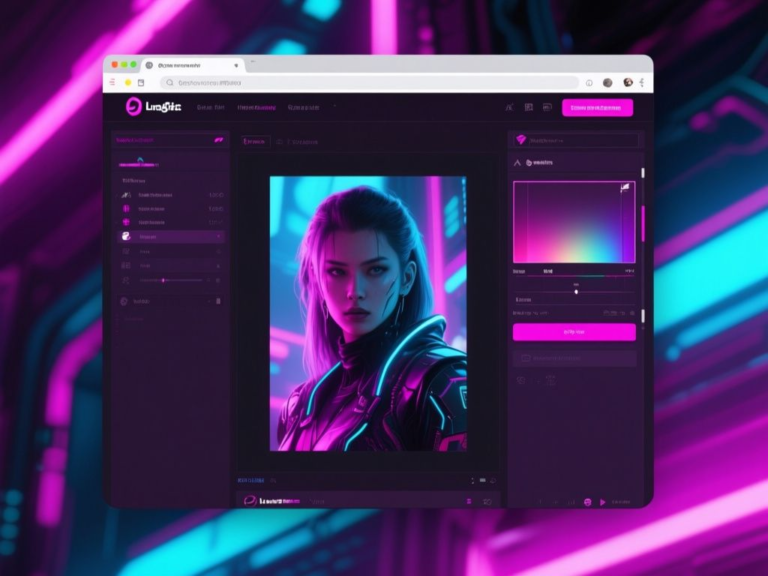
Gradio.Server empowers developers to create custom frontends while leveraging Gradio's robust backend capabilities, enhancing the flexibility of web applications.

A novel AI model developed at MIT can classify and quantify atomic defects in materials, enhancing their mechanical and thermal properties without damaging them.

The release of TRL v1.0 signifies a pivotal moment in the evolution of post-training libraries, transforming from a research tool into a robust framework for production systems.

Netflix introduces VOID, a groundbreaking video-language model that transforms how filmmakers edit scenes by removing objects and reimagining their interactions.