EnCompass: A New Framework for Optimizing AI Agent Performance
MIT's EnCompass framework enhances AI agents' efficiency by enabling automatic backtracking and parallel attempts to find optimal solutions using large language models.

MIT's EnCompass framework enhances AI agents' efficiency by enabling automatic backtracking and parallel attempts to find optimal solutions using large language models.

NVIDIA has introduced the Nemotron ColEmbed V2 family, a series of advanced late-interaction embedding models designed to improve multimodal document retrieval accuracy.
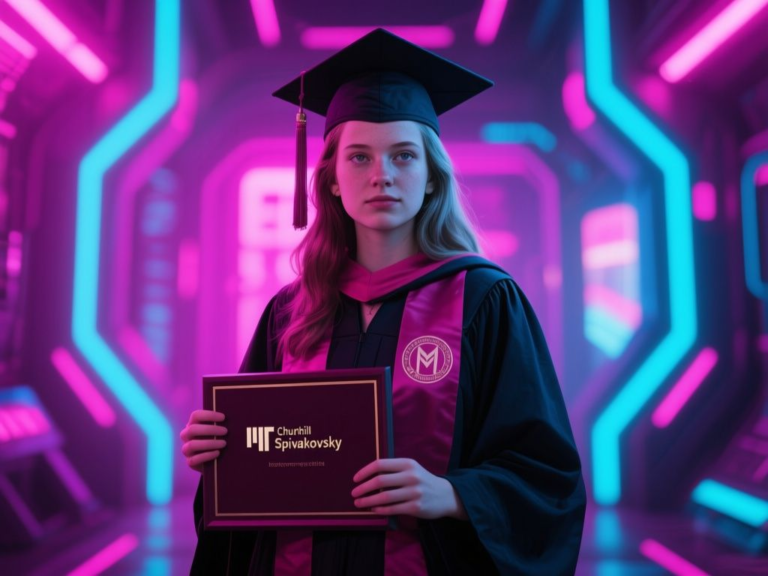
MIT senior Katie Spivakovsky has been named a 2026-27 Churchill Scholar, set to pursue an MPhil at Cambridge University focusing on biological sciences.

The Photoroom team continues its exploration of efficient text-to-image model training, focusing on the PRX model's training methodologies and their implications for future developments.
Google Gemini CLI integrates AI-driven support directly into your terminal, enhancing coding efficiency and debugging capabilities.

MIT researchers have unveiled DiffSyn, a generative AI model designed to streamline the synthesis of complex materials, particularly zeolites, enhancing the efficiency of material discovery.

Recent advancements in software agents, particularly through Claude Code, illustrate the potential of large language models to autonomously perform complex tasks, transforming the landscape of application development.

Daggr, an innovative open-source Python library, streamlines the creation of AI workflows by seamlessly connecting Gradio apps, machine learning models, and custom functions.
MIT's new course, 'AI and Rationality,' invites students to delve into the philosophical dimensions of artificial intelligence, examining the nature of rationality and its implications for AI systems.

NVIDIA has introduced three new open-source models within the Earth-2 framework, enhancing capabilities for weather forecasting and climate simulations.


