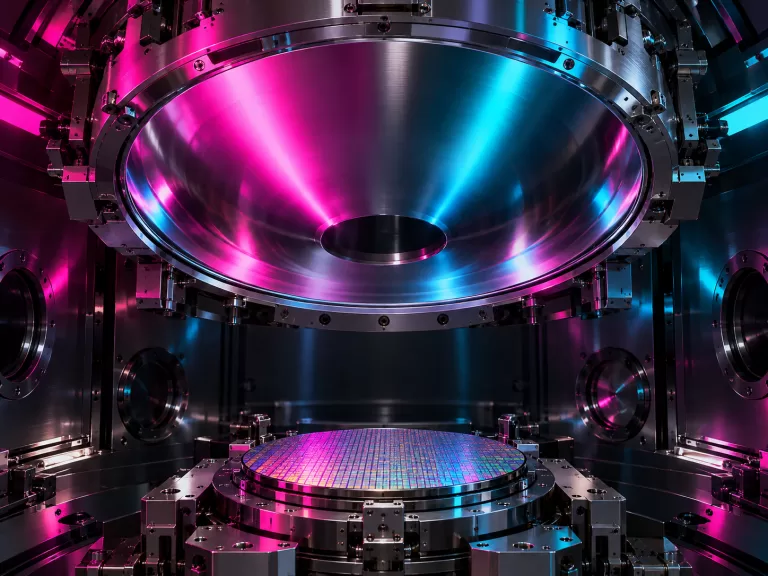
Intel is making a substantial investment in its advanced chip packaging operations, particularly at its Rio Rancho, New Mexico facility. This site, which has a history dating back to the 1980s, recently resumed operations in its Fab 9 after a lengthy dormancy, thanks in part to $500 million from the US CHIPS Act.
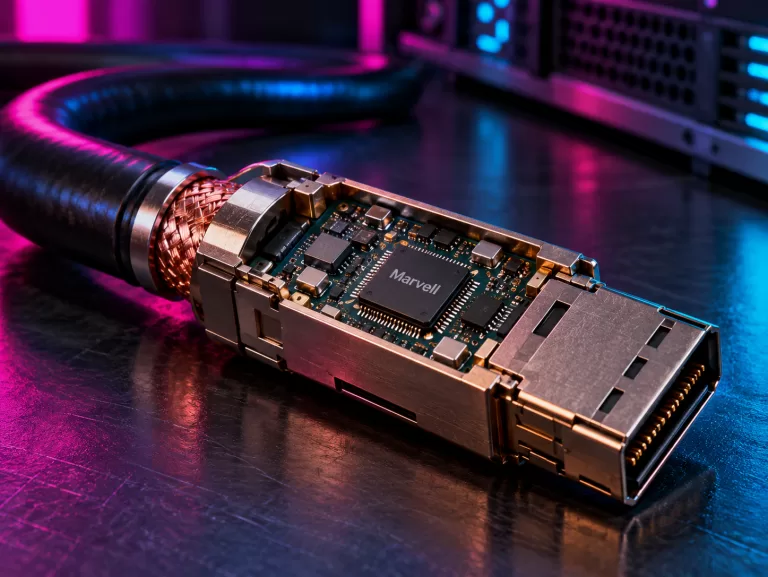
Advanced chip packaging refers to the process of integrating multiple chiplets—smaller semiconductor components—onto a single custom chip. This method is becoming increasingly important as demand for computing power surges, particularly driven by advancements in AI. Intel’s efforts in this area are intended to position it competitively against industry leader Taiwan Semiconductor Manufacturing Corporation (TSMC).
Growth in Advanced Packaging
Intel’s packaging business has shown promising growth, with CEO Lip-Bu Tan describing it as a “very big differentiator”. CFO Dave Zinsner indicated that revenue from packaging is expected to exceed $1 billion, a significant increase from earlier projections. During a recent conference, Zinsner noted that the packaging segment is currently the most compelling aspect of Intel’s Foundry business.
Intel is reportedly in discussions with major clients like Google and Amazon, both of which are developing custom chips but require external fabrication services. Securing these partnerships would be a critical step for Intel as it seeks to recover from previous setbacks in the semiconductor market.
Technological Innovations
Intel’s advancements in packaging technology include processes like EMIB (embedded multi-die interconnect bridge) and the more recent EMIB-T, which aims to enhance power efficiency and signal integrity. These innovations are designed to facilitate more effective integration of components, allowing for greater processing power and efficiency.
Chandrasekaran, head of Intel’s Foundry, emphasized that the evolution of chip packaging is crucial for meeting the demands of AI applications. He noted that the focus has shifted from merely miniaturizing components to creating more complex and efficient packaging solutions.
Future Prospects
Intel’s future in advanced packaging hinges on its ability to attract and retain customers. The company has adopted a flexible approach, allowing clients to engage with Intel at various stages of the chip production process. However, potential customers may be cautious about committing to Intel until they see tangible results from the company’s expansion efforts.
As Intel continues to ramp up its manufacturing capabilities, any significant increase in capital expenditures will likely signal the arrival of new customers and a robust demand for its advanced packaging solutions.
This article was produced by NeonPulse.today using human and AI-assisted editorial processes, based on publicly available information. Content may be edited for clarity and style.
Original source: arstechnica.com