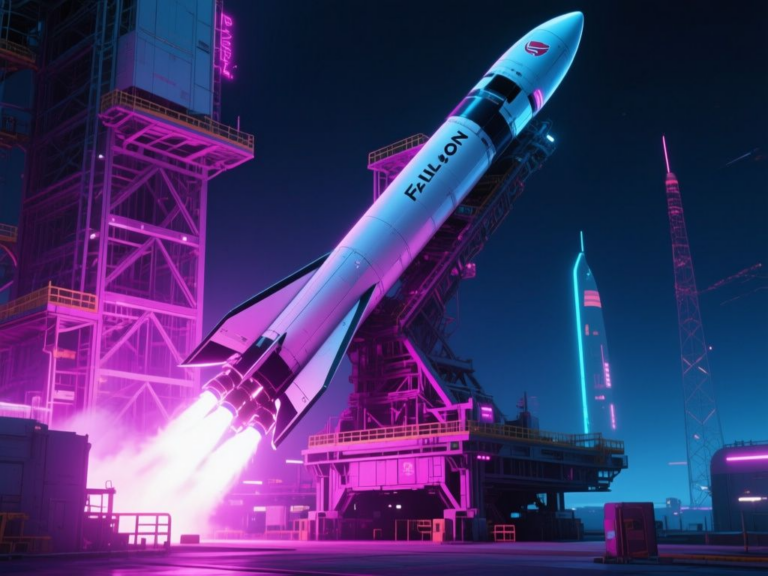
Imagine a structure that reaches from the surface of the Earth to the edge of space, allowing for the transport of goods and people without the need for rockets. This is the vision of the space elevator, a concept that has captured the imagination of scientists and futurists alike. While still theoretical, the science behind space elevators is grounded in established physics and engineering principles.
What is a Space Elevator?
A space elevator is a proposed transportation system that connects the Earth’s surface to a point in geostationary orbit, approximately 35,786 kilometers above sea level. It consists of a long cable anchored to the Earth and extending into space, with a counterweight at the far end to maintain tension. This system would allow for the lifting of payloads into orbit without the use of traditional rocket propulsion.
It is important to note that a space elevator is not a simple cable or a lift; it is a complex structure that requires advanced materials capable of withstanding extreme conditions. The concept is often compared to a geostationary satellite, but instead of orbiting the Earth, the elevator remains stationary relative to the planet’s surface.
How Does It Work?
The mechanics of a space elevator rely on the principles of tension and centrifugal force. The cable must be anchored to the Earth and extend beyond the geostationary orbit to a counterweight, which helps maintain the necessary tension. As the Earth rotates, the centrifugal force acting on the cable counterbalances the gravitational pull, keeping the structure taut.
To visualize this, consider a swinging pendulum. The weight at the end of the pendulum represents the counterweight, while the string represents the cable. As the pendulum swings, the tension in the string keeps it from falling. Similarly, in a space elevator, the counterweight ensures that the cable remains upright and stable, allowing for the safe transport of payloads.
Trade-offs: Gains vs. Sacrifices
The potential benefits of a space elevator are substantial. It could dramatically reduce the cost of launching payloads into space, making access to orbit more affordable and sustainable. Additionally, it would enable continuous transport of materials and people, facilitating space exploration and the development of space-based infrastructure.
However, these gains come with significant sacrifices. The construction of a space elevator would require materials with extraordinary tensile strength, far beyond what is currently available. Moreover, the engineering challenges associated with building such a structure, including the need to withstand atmospheric conditions and space debris, present formidable obstacles.
Limitations & Bottlenecks
One of the primary bottlenecks in the development of a space elevator is the material limitation. Current materials, such as steel and carbon fiber, lack the necessary strength-to-weight ratio. Advanced materials like carbon nanotubes and graphene show promise, but their production at scale remains a significant challenge.
Another critical limitation is the engineering complexity of constructing and maintaining the elevator. The cable must be precisely tensioned and anchored, and the system must be designed to withstand environmental factors such as wind, lightning, and thermal expansion. Additionally, the risk of collisions with satellites and space debris poses a serious threat to the integrity of the structure.
Real-World Use Cases
While still in the conceptual stage, the potential applications of a space elevator are vast. One possible use case is the transport of satellite components into orbit. Instead of relying on costly rocket launches, manufacturers could send parts via the elevator, reducing costs and increasing efficiency.
Another potential application is the establishment of a space tourism industry. A space elevator could provide a more accessible means for civilians to experience space travel, allowing for the construction of hotels or research stations in low Earth orbit. This could open up new avenues for scientific research and commercial ventures in space.
In conclusion, while the concept of a space elevator remains largely theoretical, the underlying science is rooted in established principles of physics and engineering. The vision of a structure that connects Earth to space presents both exciting possibilities and formidable challenges. As research continues into advanced materials and engineering techniques, the dream of a space elevator may one day become a reality, transforming our approach to space transportation.
This article was produced by NeonPulse.today using human and AI-assisted editorial processes. Content may be edited for clarity and style.