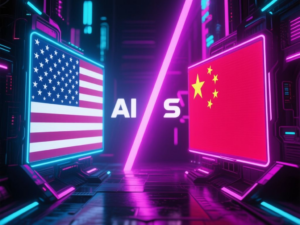
The ongoing competition in artificial intelligence (AI) has taken a notable turn with the introduction of China’s Kimi K3 model, which has reignited discussions about the U.S.’s position in the global AI landscape. This model, developed by Moonshot AI, boasts an impressive 2.8 trillion parameters, making it the largest open weights model to date.
Benchmark Performance and National Security Concerns
Historically, the release of a new Chinese AI model often triggers anxiety regarding U.S. technological supremacy. The Kimi K3 follows this trend, as its benchmark performance is positioned to rival that of leading models from U.S. companies like OpenAI and Anthropic. Notably, the model’s size and capabilities have led to heightened scrutiny, with U.S. officials expressing concerns about potential national security implications.
Responses from U.S. AI Firms
Key figures in the U.S. AI sector, such as Anthropic’s Dario Amodei, have voiced apprehensions about the competitive threat posed by Chinese models. Amodei previously accused Alibaba of leveraging U.S. technology to enhance its own models, a claim that raises questions about the ethical implications of AI development. This discourse is further complicated by Anthropic’s own legal challenges, including a $1.5 billion settlement over the use of pirated materials for training its models.
Government Actions and Industry Implications
In light of the Kimi K3’s launch, there are indications that the U.S. government may consider restricting access to Chinese AI models. Such actions could be framed as necessary for national security, but they also risk stifling competition. The U.S. has not developed large open weights models to the same extent as their Chinese counterparts, with the largest American model, Thinking Machines Lab’s Inkling, falling short at just under a trillion parameters.
The Future of AI Competition
As the U.S. and China prepare for discussions regarding their respective AI advancements, the potential for an AI arms race looms large. The outcome of these talks could significantly impact the competitive landscape, particularly if the U.S. opts for restrictive measures against Chinese models. However, such restrictions could ultimately disadvantage U.S. enterprises and consumers by limiting access to cutting-edge technology.
The Kimi K3 model serves as a reminder that the race for AI supremacy is not solely about technological prowess but also involves navigating complex geopolitical dynamics.
This article was produced by NeonPulse.today using human and AI-assisted editorial processes, based on publicly available information. Content may be edited for clarity and style.